
Mining Filter Press: A Practical Guide to Tailings Dewatering and Concentrate Recovery
In mining solid-liquid separation processes, the ability to efficiently remove moisture from tailings and mineral concentrates directly impacts three critical challenges: safety, environmental compliance, and water resource management. This article explains how mining filter presses differ from those used in general industrial applications, outlines their primary applications and selection criteria, reviews the U.S. regulatory landscape, and compares them with alternative dewatering technologies. It also discusses the role of filtration testing and the key information required before equipment specifications have been fully defined.
To learn more about the product design and key features, download the product catalog for the Filter Press (TFAP Fully Automatic Compression Type):
1. Solid-Liquid Separation in Mining and the Role of Filter Presses
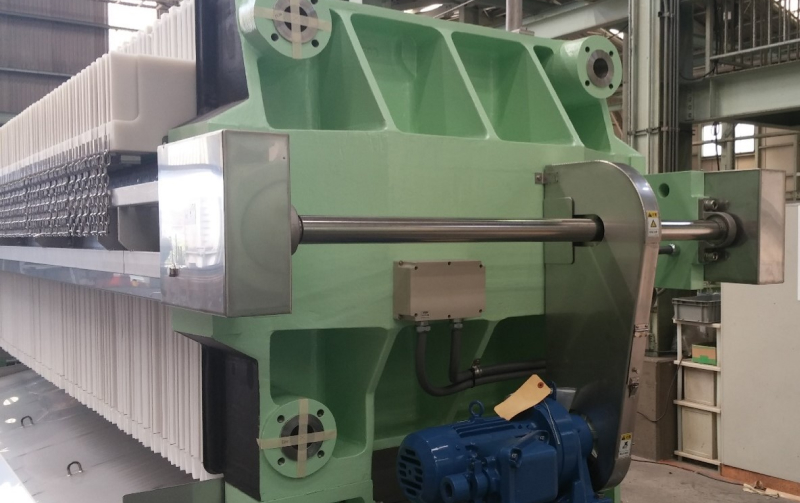
The term "mining filter press" is commonly used because the requirements of mining applications differ significantly from those of general industrial filtration. This section explains the background and key considerations that make mining filtration unique.
1.1 Drivers Behind the Growing Use of Filter Presses in Mining
As ore grades decline, mining operations must process increasingly larger volumes of ore to maintain production levels. Consequently, greater quantities of slurry—including tailings and concentrates—are generated.
Mining companies are simultaneously challenged by three major priorities:
- Safety (tailings management)
- Environmental protection (wastewater and waste disposal)
- Water conservation and reuse
Mechanical dewatering through filter presses has become a key technology for addressing these challenges.
1.2 Differences Between Mining and Industrial Filter Press Applications: Scale, Abrasion, and Corrosion
Mining filter presses differ from those used in general industry in three primary ways. First, mining operations typically require significantly larger equipment capacities and higher throughput rates. Second, abrasive mineral particles can cause wear on filter cloths and wetted components. Third, mining applications often involve corrosive slurries such as chloride-containing mine wastewater and acid mine drainage (AMD), requiring careful material selection and corrosion resistance.
▸ For information on the basic structure of the equipment and selection considerations for industrial applications, please also refer to: Industrial filter press.
1.3 Trends in the U.S. Market: Transition to Dry Stack Tailings and Water Recovery
As of 2026, mining operations throughout North America—including the United States—are increasingly moving away from conventional wet tailings impoundments (TSFs) toward filtered dry stack tailings (DST) systems. Two key drivers are accelerating this transition: 1.Reduced risk of tailings dam failures,2.Improved water recovery and reuse.
By mechanically dewatering tailings before disposal, operators can recover process water while significantly reducing long-term storage risks.
2. Tailings Dewatering and Dry Stacking
Tailings dewatering represents the largest application area for mining filter presses. This section examines conventional tailings management challenges, target moisture levels, water recovery benefits, and the trend toward larger-scale installations.
2.1 Challenges of Conventional TSFs and the Shift Toward Dry Stacking
Traditional tailings storage facilities (TSFs) carry the risk of significant environmental impacts in the event of dam failures. As a result, obtaining and maintaining a social license to operate has become increasingly challenging. In contrast, filter press-dewatered tailings can be stacked as dry stack tailings, significantly reducing the risk of catastrophic failures and improving overall site safety.
2.2 Target Moisture Levels and Transportability
Successful dry stacking requires dewatering tailings to a moisture level that allows transportation by truck or conveyor while maintaining stable pile geometry after deposition. Industry references often indicate solids concentrations of approximately 70–80% solids (20–30% moisture content) after dewatering.However, actual requirements vary depending on: Mineral characteristics,Climate conditions,Stacking methods.
Therefore, these values should be treated as practical guidelines rather than fixed performance targets.
2.3 Water Recovery and Its Importance in Arid Regions
Dry stacking enables the recovery and reuse of water separated during dewatering. In many cases, a substantial portion of process water can be recycled back into plant operations. This is particularly valuable in arid regions of the western United States, such as Arizona and Nevada, where water availability can directly affect project feasibility and operating costs.
2.4 The Trend Toward Larger-Scale Operations
Recent evaluations have demonstrated the feasibility of dry stacking even for ultra-large mining operations exceeding 100,000 metric tons per day (mtpd).
Such installations typically require: Large filtration areas,Multiple filter presses operating in parallel,Automated cloth washing systems,Automated cake discharge systems.
When designing these projects, total plant dewatering capacity—not the size of an individual filter press—should serve as the primary design basis.
3. Mineral Concentrate Dewatering
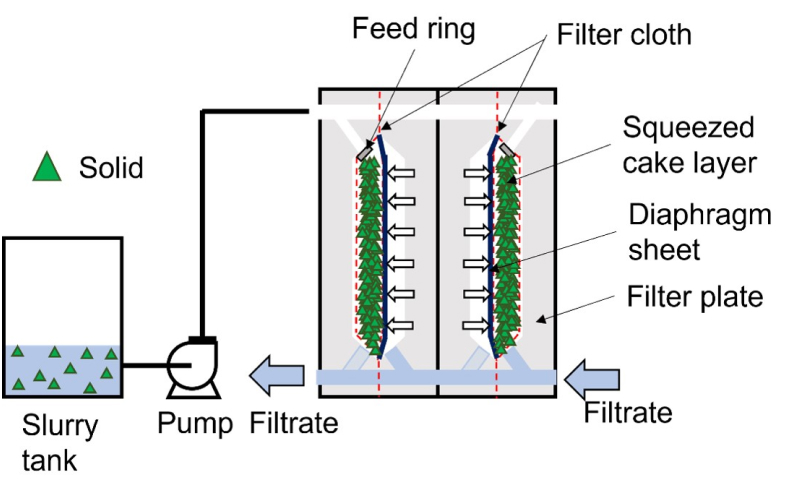
In contrast to tailings dewatering, concentrate dewatering directly affects product quality and downstream processing performance.
3.1 Dewatering Mineral Concentrates After Beneficiation
After beneficiation processes such as flotation, concentrates must be dewatered to moisture levels suitable for transportation and metallurgical processing.
Typical materials include: Copper,Zinc,Lead,Iron,Gold,Silver,Lithium,Rare earth elements,Fine coal.
Each mineral has unique moisture requirements and operating considerations. (For details, please refer to the matrix in Chapter 5.)
3.2 Impact of Residual Moisture on Transportation and Metallurgical Processing
Moisture content in concentrates directly affects:
- Compliance with Transportable Moisture Limit (TML) requirements during marine transportation
- Thermal efficiency in downstream smelting operations
Compared with tailings applications, concentrate dewatering generally requires lower final moisture contents. Copper concentrates, for example, often target moisture levels in the range of approximately 7–10%, although actual requirements vary by mineral type and operating conditions.
3.3 Advantages of Membrane Squeeze Technology
Membrane (diaphragm) filter presses are commonly selected for concentrate dewatering applications. Following primary filtration, the membrane expands and compresses the filter cake, providing secondary squeezing that can further reduce cake moisture content compared with conventional chamber filter presses. The achievable moisture reduction depends on the compressibility characteristics of the concentrate being processed.
For clarity, metallurgical refining processes—such as precious metal recovery following cyanide leaching (e.g., the Merrill-Crowe process)—involve different solid-liquid separation challenges and are beyond the scope of this article.
4. Regulatory Environment and Environmental Considerations in the United States
This section outlines the key regulatory and environmental factors that should be considered when evaluating filter presses for mining applications in the United States.
4.1 Clean Water Act, NPDES, and Mining ELGs (40 CFR Part 440)
Mining wastewater discharges in the United States are regulated under the Clean Water Act through the National Pollutant Discharge Elimination System (NPDES) permitting framework. In addition, the mining industry is subject to specific Effluent Limitation Guidelines (ELGs) under 40 CFR Part 440. Certain mining subcategories are subject to zero-discharge requirements, further increasing the importance of water recovery and water reuse within mining operations.
4.2 Tailings Dam Failure Risks and the Role of Dry Stacking
Following several high-profile tailings dam failures worldwide, public and regulatory scrutiny of tailings management practices has intensified. In the United States, maintaining a social license to operate has become an increasingly important consideration for mining companies. As a result, dry stack tailings systems are gaining broader acceptance as a safer alternative to conventional tailings storage facilities.
4.3 Critical Minerals Policies and Demand for Dewatering Equipment
The United States has been actively promoting domestic production of critical minerals, including lithium and rare earth elements. As new mining projects are developed and existing operations are expanded, compliance with environmental regulations and the installation of effective dewatering systems have become essential project requirements. Consequently, demand for filter press technology is expected to continue growing over the medium term.
5. Selection Variables and Mineral-Specific Considerations
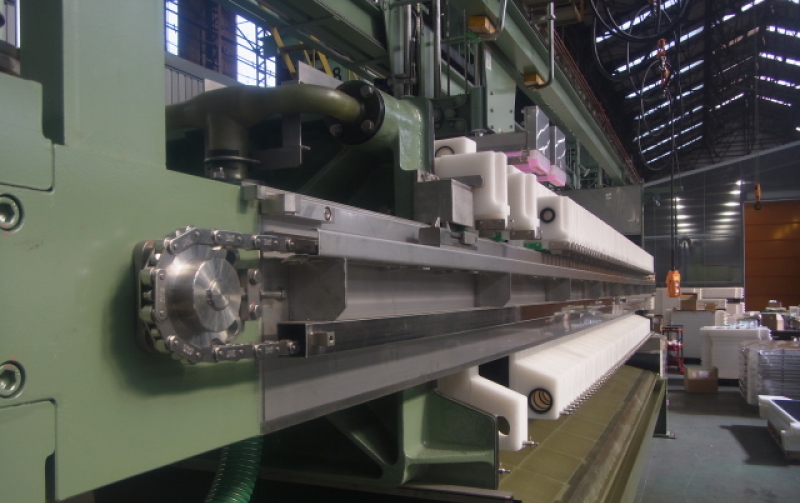
When selecting a filter press for mining applications, four primary factors should be evaluated: Slurry characteristics, Target performance requirements, Wetted material selection, Filter cloth selection. Because the dominant process challenges vary by mineral type, the relative importance of these selection criteria also changes.
5.1 Slurry Characteristics (Particle Size, Adhesiveness, Corrosiveness, and Abrasiveness)
The starting point for equipment selection is understanding the slurry itself. Four key characteristics should be evaluated: 1. Particle size distribution 2. Adhesiveness 3. Corrosiveness 4. Abrasiveness.
For example, tailings containing significant clay content are often dominated by particle size and cake adhesion issues, while acid mine drainage applications are typically governed by corrosion resistance requirements.
5.2 Target Performance (Moisture Content, Water Recovery, and Cycle Time)
Performance objectives are typically defined using three key metrics: 1. Target cake moisture content 2. Water recovery rate 3. Cycle time. Achieving lower moisture content often requires longer filtration cycles, creating a trade-off between dewatering performance and overall plant throughput. Consequently, cycle-time optimization plays a critical role in determining project economics.Achieving lower moisture content often requires longer filtration cycles, creating a trade-off between dewatering performance and overall plant throughput. Consequently, cycle-time optimization plays a critical role in determining project economics.
5.3 Wetted Materials: Resistance to Acidic and Chloride Environments
One frequently overlooked aspect of filter press selection is the design of the wetted components. Applications involving chloride-containing mine wastewater or acid mine drainage (AMD) expose wetted materials to highly corrosive environments. Effective corrosion resistance and the prevention of metallic contamination can directly affect both product quality and equipment service life.
▸ For additional information on the benefits of wetted material selection, including corrosion resistance and contamination prevention, please refer to: Advantages of filter press.
5.4 Filter Cloth Selection and Service Life Management
In mining applications, filter cloth performance has a direct impact on equipment availability. Key selection considerations include: Abrasion resistance, Resistance to blinding, Cake release performance, Air permeability (CFM), Service life over repeated filtration cycles. The choice between multifilament and monofilament fabrics should be evaluated based on operational requirements and maintenance strategies.
5.5 Frame Configuration from a Mining Perspective: Overhead Beam vs. Side Beam
Filter presses are commonly available in two frame configurations:
- Side Beam Type, where the plates are supported by side-mounted beams
- Overhead Beam Type, where the plates are suspended from an upper beam
The optimal configuration depends on factors such as processing capacity, installation space, maintenance accessibility, and site-specific requirements. Therefore, no universal preference can be applied across all mining projects.
For an overview of filter press structures, please refer to the article: Industrial filter press
Reference Matrix by Mineral Type (Typical Values Only – Final Equipment Selection Should Be Confirmed Through Filtration Testing)
| Mineral | Typical Moisture Range | Primary Challenge | Wetted Material Requirements |
|---|---|---|---|
| Copper Concentrate (Cu) | 8–10% | Transportable moisture limit (TML), downstream processing efficiency | Resistance to acidic and chloride environments |
| Gold/Silver (Au/Ag) | 9–10% | Recovery efficiency, product purity | Resistance to chlorides and process chemicals |
| Zinc-Lead Concentrates (Zn-Pb) | 7–9% | Corrosion resistance, product purity | Resistance to acidic and chloride environments |
| Iron Concentrate (Fe) | 5–6% | High throughput, abrasion | Wear-resistant standard materials |
| Fine Coal | 12–15% | Fine particles, processing capacity | Standard materials |
| Lithium | 9–12% | Product purity, corrosiveness | Resistance to chlorides and acidic conditions |
| Rare Earth Elements (REEs) | Application dependent | Limited operating data; verification required | Case-by-case evaluation |
The moisture ranges shown above are intended as industry reference values. Actual achievable moisture content depends on slurry compressibility and other process variables. Final equipment selection should therefore be based on filtration testing using the actual slurry.
6. Comparison with Alternative Technologies: Thickeners, Belt Filters, and Centrifuges
In mining operations, filter presses are often used alongside other dewatering technologies or evaluated as alternative solutions. This section compares the major technologies commonly considered in mining applications, focusing on factors that are particularly relevant to the industry.
For a general comparison of filtration and solid-liquid separation technologies, please also refer to: Liquid filtration
6.1 Integration with Thickeners
In most mining operations, the dewatering process consists of two stages:
- Thickener (slurry thickening) → Filter Press (mechanical dewatering)
- The thickener increases solids concentration upstream, while the filter press further reduces moisture content to the required final target.
As a result, thickeners and filter presses are typically complementary technologies rather than competing alternatives.
6.2 Comparison with Belt Filters: Continuous Operation vs. Moisture Reduction
Belt filters are well suited for continuous operation and high-volume processing. Filter presses, on the other hand, generally achieve lower residual moisture contents in the filter cake.
As a rule of thumb:
- When achieving a low final moisture content is the primary objective, filter presses tend to be preferred.
- When continuous operation and high throughput are the dominant requirements, belt filters are often considered.
The final selection should be based on the specific process requirements and project objectives.
6.3 Comparison with Centrifuges: Particle Size and Operating Costs
Centrifuges offer advantages in terms of compact installation footprint and continuous operation. However, they generally consume more energy than filter presses and produce a higher residual moisture content in the discharged solids. Centrifuges are often considered for slurries containing fine particles or relatively low solids concentrations. In many mining applications, however, they serve a complementary rather than primary dewatering role.
▸ For an overview and general comparison of the various technologies, please refer to: Liquid filtration.
When determining the most suitable dewatering technology for your mineral or slurry, testing with the actual slurry is often the fastest path to a reliable decision.
■ Request For Filtration Test:
Evaluate filtration performance using your actual slurry.
■ Technical Inquiry:
Consult regarding equipment selection or application suitability.
7. Key Evaluation Items for RFPs and Pilot Testing
Mining projects are often characterized by large capacities, customized requirements, and significant capital investment. As a result, the quality of information gathered during the early stages of a project has a direct impact on quotation accuracy, project schedules, and confidence in full-scale plant performance.
In the North American mining market, it is common practice to begin discussions before equipment specifications are fully defined, conduct filtration testing with actual slurry samples, and then proceed to detailed equipment sizing and commercial proposals.
7.1 Information Required for an RFP
At the quotation stage, the following information should be provided whenever possible:
- Processing capacity (t/h or mtpd)
- Slurry composition, including solids concentration, particle size distribution, pH, chloride concentration, and temperature
- Target performance requirements, such as moisture content, water recovery rate, and cycle time
- Site conditions, including elevation, ambient temperature, and power supply characteristics
Compared with many other industries, climatic and geographical conditions often play a more significant role in mining projects and should be considered early in the selection process.
7.2 Performance Indicators to Verify Through Filtration Testing
Before selecting full-scale equipment, filtration testing should be conducted to verify key performance indicators, including: Achievable cake moisture content, Cycle time, Suitability of filter cloth selection, Cake release characteristics, Filtrate clarity. Because mining slurries often exhibit considerable variability in composition and behavior, testing with actual slurry samples is essential for reducing technical and investment risk.
7.3 Phased Procurement for Large-Scale Projects
For large mining projects processing approximately 100,000 metric tons per day or more, a phased implementation approach is often adopted. A typical project progression may include:
Pilot Testing → Initial Commercial Operation → Future Expansion
This approach helps reduce project risk while preserving flexibility for future capacity increases. Incorporating expansion capability into the initial equipment design can provide significant long-term advantages as production requirements evolve.
8. Kanadevia Filter Presses for Mining Applications: Design Philosophy
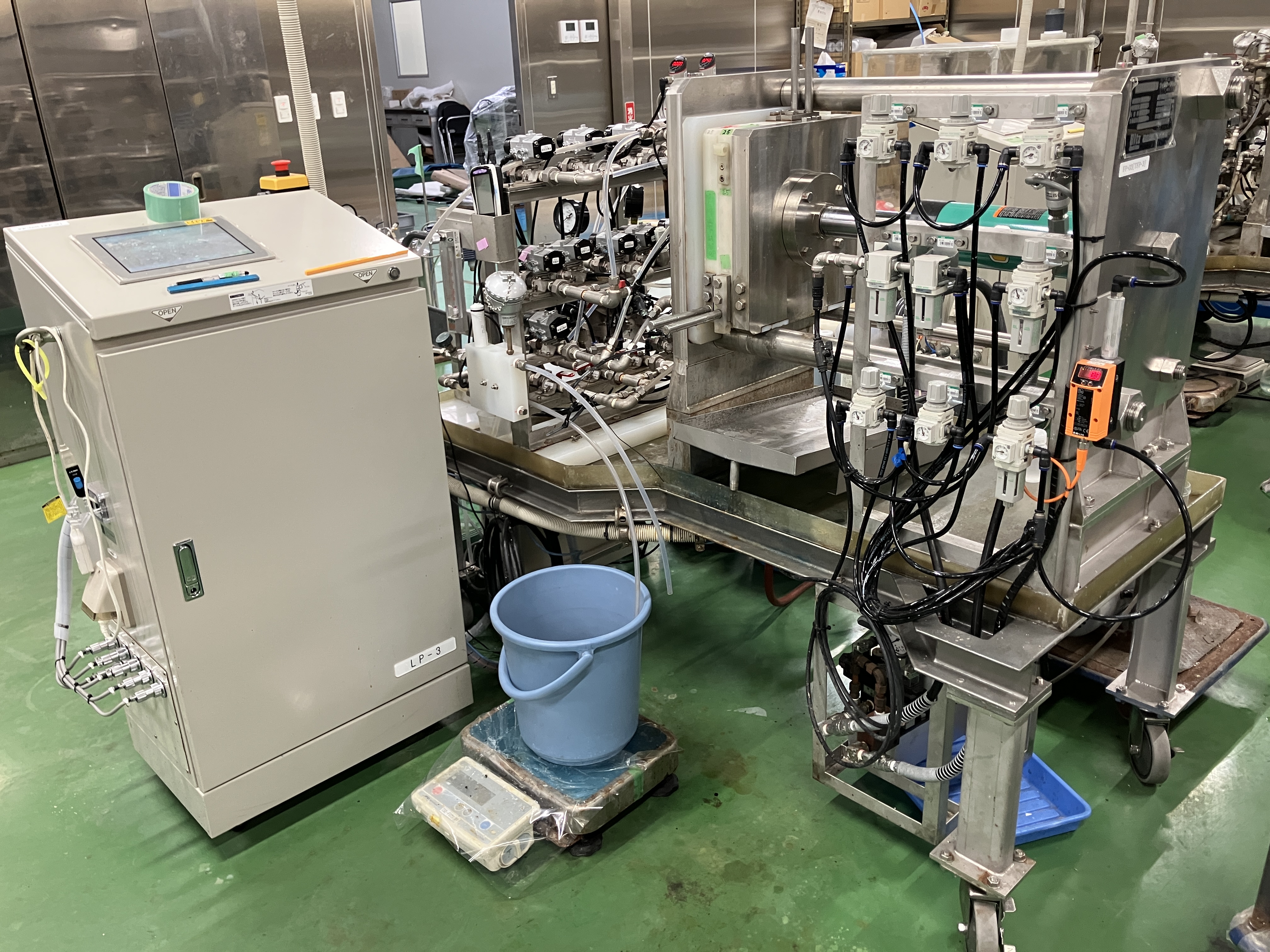
Kanadevia's filter press design philosophy addresses the key challenges of mining applications through four core features.
| ① Metal-Free Wetted Components (PP + Elastomers) By eliminating metal from wetted components and utilizing polypropylene and elastomer materials, the system helps minimize the risk of corrosion and metallic contamination in acidic and chloride-containing environments. |
② Double Top Corner Feed Design The Double Top Corner Feed configuration promotes uniform filtration, dewatering, and cake washing across the entire filtration area, contributing to stable concentrate recovery and product quality. |
| ③ Reliable Cake Discharge with Scraper Technology Even sticky or difficult-to-handle residues can be discharged effectively. Automated scraper systems help reduce manual intervention while maintaining high equipment availability. |
④ Easy Filter Cloth Replacement The filter cloth attachment design allows cloths to be installed and secured from above, simplifying maintenance procedures and reducing labor requirements, particularly at remote mining sites where maintenance resources may be limited. |
9. Next Step: Start with Filtration Testing and Technical Consultation
Because mining slurries can vary significantly in their filtration and dewatering characteristics, testing with the actual slurry is often the most reliable starting point for investment decisions. Kanadevia provides a variety of filtration testing services at its laboratory facilities in Japan and can accommodate witness testing upon request. To facilitate the evaluation process, customers are encouraged to prepare the following information before making an inquiry: Solids concentration, Process liquid name, Required filtration area, Chamber thickness, Application details. Providing this information in advance helps streamline technical discussions and ensures that appropriate testing conditions can be established.
Next Step
■ If Specifications are Unconfirmed:
■ If Specifications are Finalized:
■ If You Would Like to Learn More Before Starting: