
Industrial Filter Press: Practical Guide for Equipment Selection and Operation
Industrial filter presses are critical assets utilized across a wide spectrum of solid-liquid separation processes, ranging from wastewater treatment to chemical, pharmaceutical, and mining operations. However, the term "filter press" encompasses a vast range of configurations. The ideal equipment specifications vary dramatically based on the internal design (recessed chamber, membrane squeeze, or plate-and-frame), the level of automation, and the specific characteristics of the target slurry.
This guide outlines the essential evaluation criteria that US procurement managers and engineers must consider during the comparative review phase. We organize these key insights by equipment type, industry application, selection metrics, operational pitfalls, and RFP (Request for Proposal) formulation.
1. What is an Industrial Filter Press?
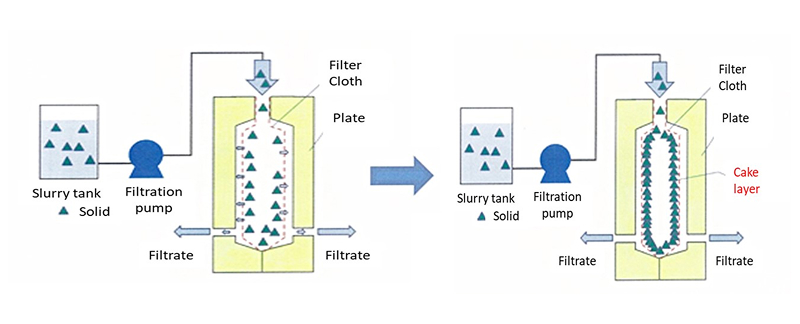
An industrial filter press is a dewatering machine that uses pressure to filter slurry (a mixture of solids and liquids) and separate it into solid cakes and liquid filtrate. These systems are typically deployed in wastewater treatment to dewater sludge and reduce disposal costs, or in production processes to wash and dewater recovered products.
1.1 Basic Principles of Solid-Liquid Separation and Industrial Applications
Slurry is pumped under pressure into chambers formed between filter plates and filter cloths. The filtrate passes through the cloth while the solids are retained inside the chamber, forming a compact cake that physically separates the liquid and solid phases. In industrial plants, systems are typically deployed to cut disposal costs (by reducing moisture and cake volume), meet environmental regulations, or recover valuable metals and products. Compared to belt filters or centrifuges, filter presses offer distinct advantages in final cake dryness and filtrate clarity. For detailed comparisons with other technologies, please refer to our articles on Liquid Filtration and Vacuum Belt Filters.
1.2 Core Components of Industrial Filter Presses
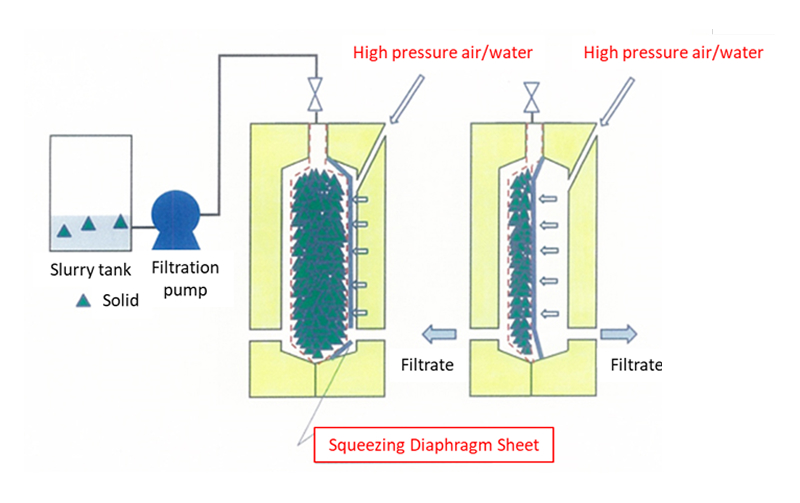
An industrial filter press consists of filter plates (recessed or membrane plates), filter cloths, a closing mechanism (hydraulic cylinder), shifting blocks, a frame, a feed pump, and a control panel for operations. In membrane squeeze systems, a diaphragm inside the plate inflates to apply a secondary squeeze to the cake, driving moisture levels even lower. Focusing on both material selection and maintenance design is critical for practical operation because filter cloth selection and the ease of changeouts directly impact plant uptime.
1.3 Distinctions from Lab-Scale & Compact Units (Scale, Continuous Operation, and Durability)
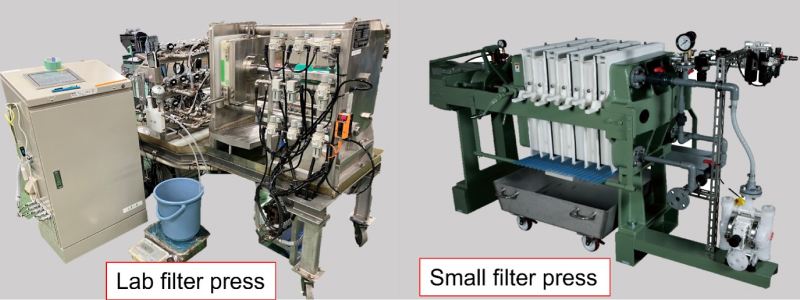
Industrial filter presses handle a broad operational range, with plate sizes spanning from 300 mm to over 2,000 mm and filtration areas covering a few square meters up to several hundred. Unlike lab units, these systems are built for 24/7 continuous cycle operations. Their corrosion and pressure resistance requirements are also far more stringent; typical designs handle membrane squeeze pressures from 0.7 to 2.0 MPa and operating feed pressures up to 15 to 30 bar. Practically speaking, determining whether your application requires an industrial-class system comes down to evaluating three core factors: throughput volume, continuous run-times, and corrosion requirements.
2. Industrial Filter Press Types
The exact specification of an industrial filter press is determined by combining its plate structure (recessed chamber, membrane squeeze, or plate and frame) with its required level of automation. While detailed structural teardowns for each type can be found in our Types of Filter Press article, this section summarizes them from a practical equipment-selection perspective.
2.1 Recessed Chamber Type
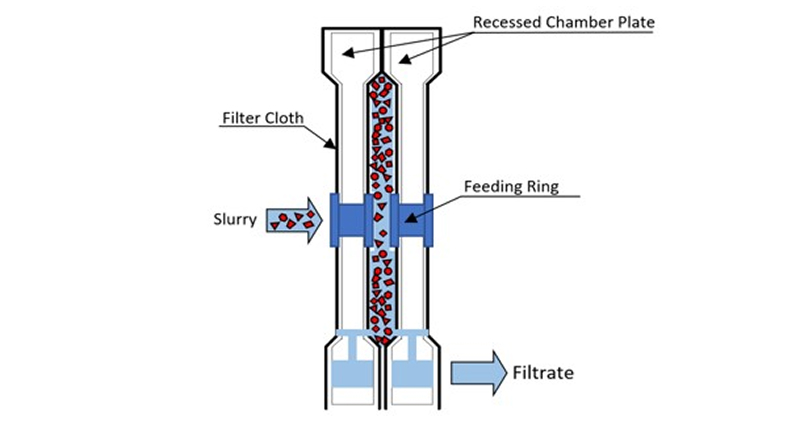
This is the most versatile design, using recessed plates facing each other to form the internal filtration chambers. The structure is simple and easy to maintain, making it widely applicable for everything from industrial wastewater to chemical processing. While final cake moisture depends entirely on slurry properties, feed pressure, and cycle times, this type is generally best suited for low-to-medium compressibility slurries. When handling high-moisture slurries or when you need to drive cake moisture levels down to the absolute minimum, a comparative evaluation with a membrane squeeze system is required.
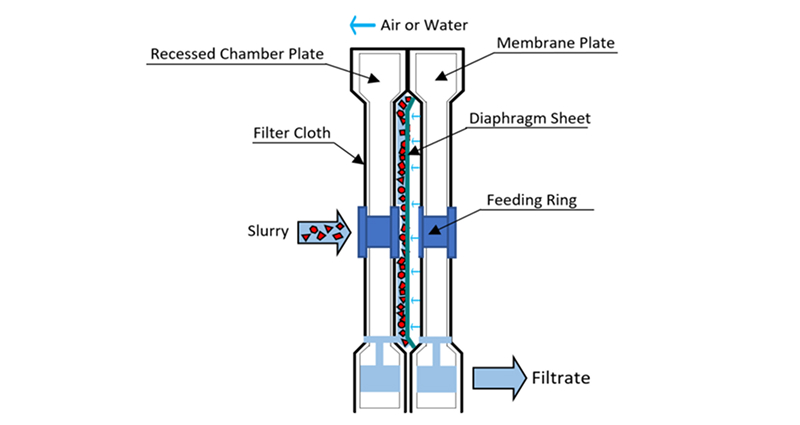
2.2 Membrane Squeeze Type (Membrane / Diaphragm)
This design integrates an inflatable diaphragm membrane into a standard chamber plate. After the initial filtration step, the diaphragm expands to execute a secondary mechanical squeeze on the cake. Forcing out this residual moisture can lower final cake moisture by an additional several percent to over ten percent compared to non-squeezing systems, depending on the compression characteristics of the slurry. Shorter cycle times, reduced waste disposal fees, and lower downstream drying costs provide clear financial benefits. While the initial capital investment is slightly higher, Kanadevia offers membrane squeeze models as a standard feature. This limits the price gap and makes the system highly attractive when evaluated on total cost of ownership (TCO).
2.3 Plate and Frame Type
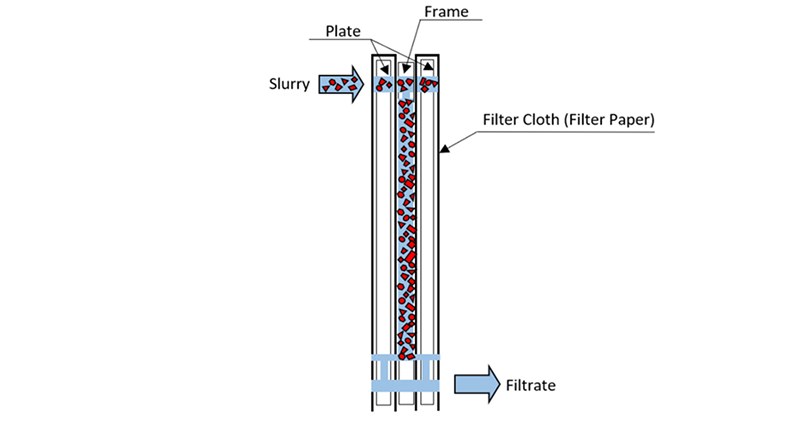
As the oldest design historically, this setup alternates plates and open frames, which makes cake washing highly effective. It works well for low-solids slurries, but discharging the cake often requires manual labor, and its assembly carries a higher risk of leaking. Today, it is mostly used for small-batch processing in the food, pharmaceutical, and chemical industries. For a full breakdown of the structure, please refer to our article on Plate and Frame Filtration.
2.4 Differences in Frame Designs: Side-Bar vs. Overhead Beam
There are two main frame designs used to support filter plates: side-bar types (where plates rest on lateral side beams) and overhead beam types (where plates are suspended from a top rail). When choosing a machine, engineers typically evaluate these designs based on durability, maintenance access, and ease of operation to match the site's running conditions. The ideal frame structure depends heavily on the specific application, throughput, and installation environment, making it most practical to select the design after reviewing individual project requirements.
2.5 Automation Levels (Manual to Fully Automatic)
Industrial filter presses are categorized into four stages—manual, semi-automatic, automatic, and fully automatic—depending on how many steps are automated, including closing, opening, plate shifting, cake discharge, cloth washing, and system monitoring. Fully automatic models are becoming the standard in modern plants requiring 24/7 continuous runs or minimized headcount. However, manual or semi-automatic setups are often the more cost-effective choice for low-volume applications or low-frequency batches. For more details on automation, please refer to our article on Automatic Filter Presses.
3. Industry-Specific Selection Points
Different industrial sectors face unique process variables and typical operational challenges. (For a complete breakdown of specific use cases, see our Filter Press Applications article). This section concentrates exclusively on the core criteria required for equipment selection.
3.1 Chemical, Pharmaceutical, and Catalyst Processing
Maximum corrosion resistance is essential when handling aggressive acidic, alkaline, or chloride-based slurries. To prevent metallic contamination and catalyst poisoning (where trace metals degrade catalytic activity), wetted parts must be made from non-metallic materials like polypropylene (PP) or rubber. Additionally, uniform cake washing is critical because it directly impacts product purity and recovery rates. For certain pharmaceutical applications, full compliance with GMP (Good Manufacturing Practice) standards is a core project requirement.
3.2 Non-Ferrous Smelting and Rare Metals
The primary design requirements in this sector focus on corrosion countermeasures for acidic leaching solutions and optimizing residue washing to maximize recovery yields. Sticky or viscous residues frequently cause poor cake discharge behavior so reliable cake release is often crucial for overall plant uptime. Many facilities deploy high-pressure operations (15 to 30 bar) to drive down moisture levels and minimize residue disposal costs.
3.3 Battery Materials and Hydrometallurgical Recycling
In this sector, wash purity is the ultimate determining factor for final product quality. Achieving maximum impurity removal through uniform cake washing and securing consistent recovery yields are the top priorities. The key technical checkpoints during equipment selection include resistance to highly corrosive chemical reagents, absolute prevention of metallic contamination, and gathering reliable test data to ensure a smooth scale-up from pilot lines to mass production.
3.4 Wastewater Treatment and Sludge Dewatering
Lowering cake moisture is the primary economic driver in this sector, as it directly cuts waste disposal costs. Meeting environmental regulations, including effluent discharge limits and sludge disposal rules, is mandatory. Since maintenance time and automation levels dictate long-term operating costs, whether a plant needs 24/7 continuous operation or remote monitoring is a key factor during equipment selection.
3.5 Food and Beverage
Food and beverage applications require sanitary designs with FDA-compliant materials, such as stainless steel or food-grade polypropylene, and must be easy to clean. For products where filtrate clarity is a key quality metric—such as juice, wine, or cooking oils—selecting the right filter cloth and utilizing pre-coat technology are essential to meet quality standards.
Consult Based on Your Industry and Process
Performance requirements and common challenges vary by industry. We can help you identify the most suitable solution based on conditions and processes similar to your own.
■ Product Catalog:
An overview of applicable industries, equipment configurations, and key features.
■ Consult Based on Your Industry:
Discuss solution based on operating conditions and processes similar to those of your business.
4. Selection Criteria (Deconstructing Variables)
Selecting an industrial filter press requires a multi-dimensional decision-making process involving several interconnected variables. Organizing your evaluation around the following four pillars simplifies the review process:
4.1 Slurry Characteristics (pH, Adhesiveness, Filtrability, and Solids Concentration)
The pH level (acidic, alkaline, or neutral) dictates material selection, while adhesiveness determines the cake discharge method. Filtrability and solids concentration are the primary variables used to calculate chamber capacity and cycle times. Mapping out how each slurry property corresponds to specific equipment design parameters makes it clear exactly what data you need to verify for your specific slurry.
4.2 Performance Targets (Cake Dryness, Wash Purity, Filtrate Clarity, and Throughput Capacity)
The target cake dryness directly dictates whether membrane squeezing is required and has a major impact on waste disposal costs. Wash purity (residual impurity concentration) serves as a benchmark for the necessity of a uniform wash design. Filtrate clarity directly influences environmental compliance and final product quality. Finally, throughput capacity (m³/h) is an output value determined by plate size, plate count, and overall cycle time. Organizing the interdependencies and priorities among these four metrics is a prerequisite before finalizing equipment specifications.
4.3 Operational Conditions (Automation Level, Ease of Maintenance, and Installation Environment)
The level of automation impacts labor costs, workplace safety, and plant uptime. Ease of maintenance—including cloth replacement frequency, cloth washing method, and the accessibility of spare parts—is the primary driver of long-term operational costs (OPEX). The installation environment (indoor vs. outdoor layout, corrosive conditions, explosion-proof requirements, and footprint constraints) acts as a critical design constraint that shapes the equipment's physical design.
4.4 Total Cost of Ownership (CAPEX, OPEX, and Operational Savings)
Equipment selection should move beyond a simple CAPEX comparison. Instead, teams must conduct a comprehensive ROI evaluation that incorporates OPEX, waste-minimization savings, and enhanced recovery yields of valuable target materials. For instance, the incremental cost of upgrading to a membrane-style press is frequently justified within a short payback period by the significant drop in hauling and disposal fees driven by superior cake dewatering.
5. Industrial Filter Press Comparison Table
This table compares the three main filter press types based on the core criteria used during equipment selection.
| Selection Criteria | Recessed Chamber Type | Membrane Squeeze Type | Plate and Frame Type |
|---|---|---|---|
| Initial Cost | Average | Slightly High | Low |
| Final Cake Moisture | Moderate | Low (Advantage) | Tends to be high |
| Cake Washing Performance | Good | Good | Excellent |
| Discharge Reliability | Design-dependent | Good | Often requires manual labor |
| Best-Suited Applications | General purpose | Prioritizing moisture reduction | Small batch / High-purity washing |
6. RFP & Specification Data Requirements
To fast-track a highly accurate technical proposal and budget estimate, please include the following parameters in your Request for Proposal (RFP):
- Slurry Chemistry: Name, composition, pH, chlorides, temperature
- Solids Characteristics: Solid concentration, particle size distribution, and presence of adhesive/sticky properties
- Sizing Requirements: Required filtration area (if known) or total throughput capacity (m³/h)
- Performance Targets: Target moisture reduction (cake dryness) and required filtrate clarity
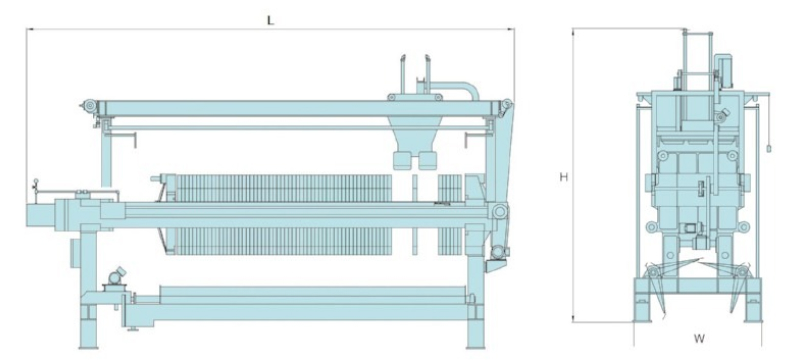
- Chamber & Plate Dimensions: Preferred chamber thickness and plate size dimensions (if known)
- Application & Operation Cycle: Intended use (wastewater vs. process line) and operational cycle details (batch frequency and continuous operating hours)
- Site Conditions: Physical layout constraints (indoor/outdoor, explosion hazard ratings) and serviceability priorities
For new slurries or projects where specifications have not yet been finalized, running laboratory filtration tests beforehand will significantly improve both the accuracy of your RFP and the reliability of your capital investment decisions.
Move Forward with RFP Preparation and Quotation
Once the key specification requirements have been clarified, the next step is to validate the application with actual process data and obtain a quotation. Providing information such as solids concentration, process liquid details, required filtration area, chamber thickness, and intended application will enable us to develop a more specific and accurate proposal.
■ A Filtration Test / Technical Consultation:
Confirm equipment specifications using your actual slurry and obtain supporting data for your RFP.
■ Technical Consultation:
Discuss your process conditions and specification requirements with us directly.
■ Request a Quotation:
If your specifications have already been defined, you can proceed directly to a quotation request.
7. Common Pitfalls in Industrial Filter Press Selection
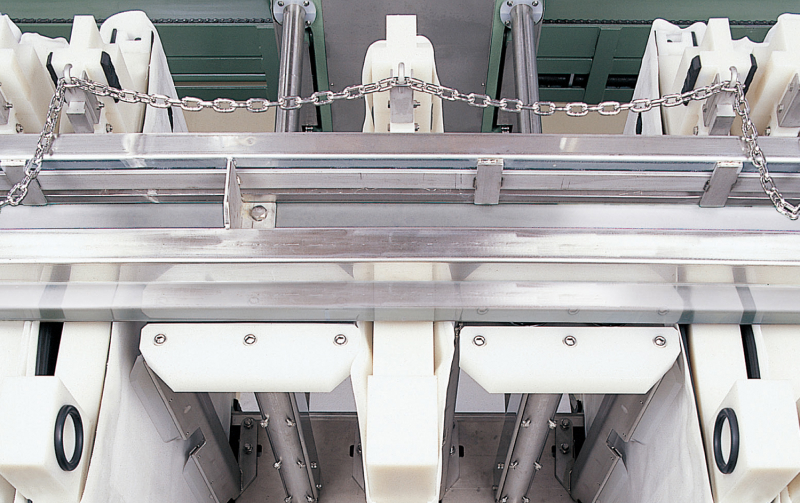
7.1 Poor Cake Discharge: Decreased Uptime Caused by Sticky Slurries
With highly adhesive slurries, the filter cake tends to stick to the cloth, requiring manual operator intervention for removal. This is one of the most frequently cited challenges in industrial filter press operations, impacting both plant uptime and floor safety. Effective countermeasures include optimizing the filter cloth material, implementing mechanical scraper systems, and automating the cloth washing process. It is highly recommended to verify cake release properties through prior laboratory filtration testing.
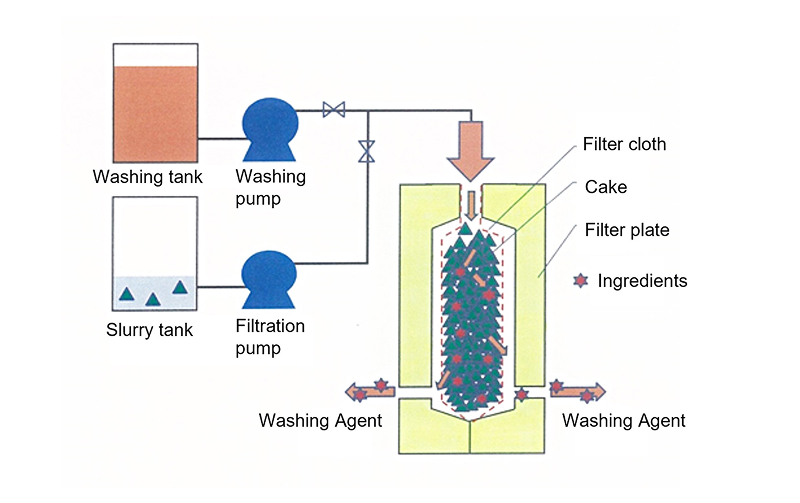
7.2 Uneven Cake Washing: Variances in Purity and Recovery Yields
Non-uniform cake washing leads to inconsistent product purity and the loss of valuable components during recovery. This issue often stems from the slurry distribution structure (feed style). It can be mitigated through specialized distribution designs—such as a corner-feed structure—as well as optimizing wash liquid flow rates, cycle times, and cloth selection. For applications where uniform washing is a critical Key Performance Indicator (KPI), verifying the distribution design specifications during the initial equipment selection phase is vital.
7.3 Corrosion & Metal Contamination: Neglecting Wetted Parts Specifications
Exposing metal wetted components to aggressive slurries risks premature equipment failure, chemical leaks, and catastrophic product contamination or catalyst poisoning. When auditing material specifications, engineers must thoroughly analyze pH, chloride levels, temperature, and chemical composition. These data points dictate whether you should pivot to a metal-free wetted architecture utilizing polypropylene (PP) and rubber components.
7.4 Extended Maintenance Downtime: Labor Burden of Cloth Replacement & Washing
Maintenance labor for cloth replacement and washing depends entirely on the cloth's configuration, plate design, and physical changeout mechanics. If service downtime is choking your operational efficiency, prioritizing an easy-to-install drape-over cloth style and integrated automated washing systems is vital during your equipment review.
8. Kanadevia's Industrial Filter Press Design Philosophy
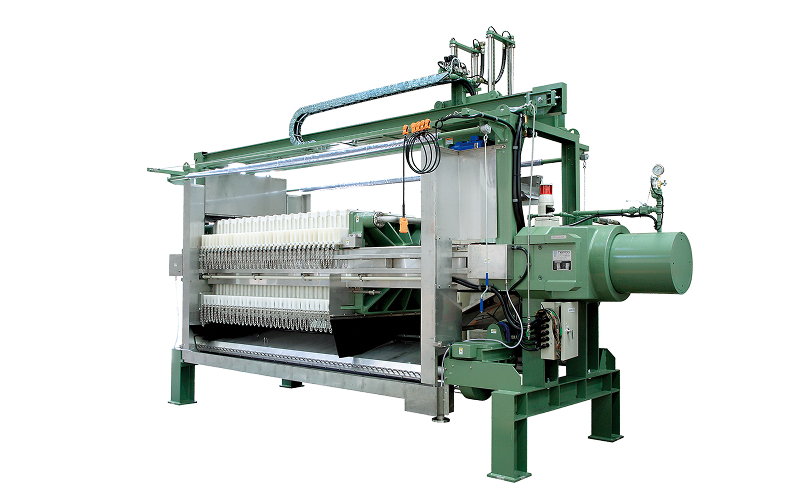
Kanadevia's industrial filter presses tackle these common operational pitfalls with four specific design approaches:
| Metal-Free Wetted Design (Polypropylene & Rubber Components) Engineered to eliminate metallic contamination and minimize leaks or maintenance shutdowns caused by corrosive slurries. This combination of polypropylene and rubber delivers dependable corrosion resistance in demanding acidic, chloride-based operations. |
Double Top-Corner Feed Optimizes slurry distribution to eliminate variances in filtration, dewatering, and cake washing. This delivers superior performance in applications where washing uniformity dictates product quality. |
| Mechanical Scraper Discharge Ensures consistent, automated cake release even with highly adhesive slurries. This mechanism minimizes manual labor, boosting both plant uptime and workplace safety. |
Drape-Over Cloth Replacement Features a drape-over cloth design that makes changeouts fast and simple. By significantly cutting down on labor hours and equipment downtime, this design relieves pressure on limited on-site maintenance personnel. |
For new slurries or projects still in the pre-finalization phase, we provide filtration testing services at our Chikko Plant laboratory. The lab setup utilizes a 350 mm single-chamber testing unit with a filtration area of 0.117 m² and selectable chamber thicknesses of 25, 30, or 40 mm. By verifying throughput capacity, target cake dryness, and the optimal filter cloth through precise test data, you can significantly increase the accuracy of your investment decisions.
9. Next Step: Consult with Kanadevia
Choosing the right industrial filter press depends entirely on your specific slurry properties, target performance, and operating conditions. Depending on your current project stage, please use one of the following three entry points:
Next Step
■ If Specifications are Unconfirmed:
■ If Specifications are Finalized:
■ If in the Early Planning Stages:
For a more tailored proposal, please provide the following 5 parameters when contacting us: (1) Slurry/Fluid Name, (2) Solid Concentration, (3) Intended Application, (4) Required Filtration Area, and (5) Chamber Thickness.