
How a Filter Press Works and Its Operating Cycle: From Filtration to Cake Washing, Squeezing, and Discharge
A filter press is a solid-liquid separation device that applies pressure to a slurry (a liquid containing suspended solids), forcing it through filter cloths to separate solids (filter cake) from liquid (filtrate). This article explains the role of a filter press, its major components, the complete operating cycle from closing to cloth washing, the variables that influence cake moisture content and cycle time, and how different levels of automation affect operating workload. The information is organized to support practical process and operational decisions.
If you would like to review the product structure and specifications, please download the product catalogue:
1. What Is a Filter Press? An Overview of Solid-Liquid Separation and Dewatering
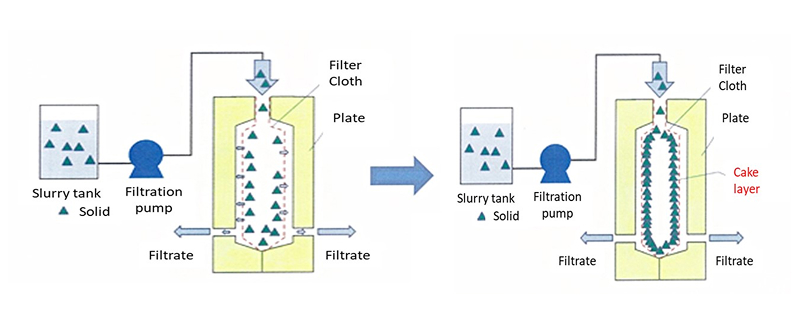
A filter press separates solids and liquids by applying pressure to a slurry and forcing the liquid through filter cloths while retaining the solids as a filter cake. Before discussing the individual components and operating steps, it is helpful to understand what the equipment separates and how the overall process progresses from filtration to cake discharge.
1.1 Purpose: What Does a Filter Press Separate?
The primary function of a filter press is solid-liquid separation. It concentrates suspended solids from a slurry, recovering the liquid as clarified filtrate while producing a dewatered filter cake that is easier to handle and dispose of or process further.
Applications generally fall into two categories:
- Wastewater treatment, where the objective is to reduce sludge volume and moisture content, thereby lowering disposal and transportation costs.
- Production processes, where the objective is to dewater or wash materials, improve product purity, and maximize the recovery of valuable components.
Although the same equipment may be used in both cases, the key performance indicators (KPIs) differ according to the application. It is also important to distinguish between filtration, dewatering, and cake washing, as each serves a different purpose:
- Filtration separates solids from liquids.
- Dewatering reduces the moisture retained in the filter cake.
- Cake washing replaces the residual mother liquor within the cake with a washing liquid.
▸ For application-specific examples, see: Filter press applications
1.2 Overall Process Flow: From Filtration to Cake Discharge
The operating sequence typically consists of:
- Closing
- Slurry feeding and filtration
- Cake washing (if required)
- Cake squeezing
- Opening and cake discharge
- Filter cloth washing
A key characteristic of a filter press is that it operates in a batch process. After each cycle, the accumulated filter cake is discharged before the next cycle begins. Unlike continuous filtration equipment, the cycle time of a filter press directly affects overall processing capacity.
| Step | Description |
|---|---|
| 1. Closing | The hydraulic system compresses the filter plates together to seal the filter chambers. |
| 2. Slurry Feed & Filtration | Slurry is pumped into the chambers, and solids accumulate on the filter cloth to form a filter cake. |
| 3. Cake Washing | Residual mother liquor within the cake is displaced by wash liquid where product purity or recovery is critical. |
| 4. Squeezing | Diaphragm plates expand to mechanically compress the cake and further reduce moisture content. |
| 5. Opening & Discharge | The filter plates are opened sequentially, allowing the filter cake to fall from the chambers. |
| 6. Cloth Washing | Remaining particles are removed from the filter cloth using high-pressure water in preparation for the next cycle. |
2. Major Components and Their Functions During Operation
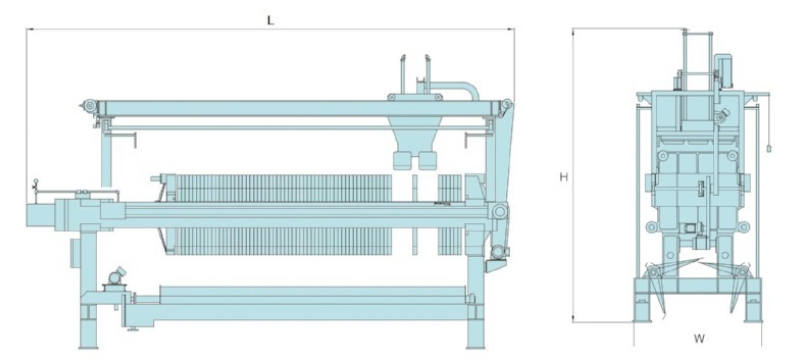
The components of a filter press can be best understood by examining their physical role during filtration and dewatering operations. This section focuses on the operational function of each component rather than detailed design specifications.
2.1 Frame, Fixed Head, and Moving Plate Shifter
The frame supports the entire filter press structure, while the fixed head (fixed end plate) anchors one end of the filter plate stack. The hydraulic system is responsible for closing and opening the plate pack. During cake discharge, the moving plate shifter operates the plate hooks and opens the filter plates.
Reliable closing force is essential because it directly affects:
- Chamber sealing integrity
- Prevention of slurry leakage
- Stable operation under pressure
2.2 Filter Plates, Chambers, and Filter Cloths
When filter plates are stacked and compressed together, they create enclosed spaces known as filter chambers, where the filter cake is formed. The filter cloth retains solid particles while allowing liquid to pass through.
The most common configuration uses:
- Recessed (chamber-type) filter plates to form the filter chambers
- Diaphragm squeeze plates to provide post-filtration mechanical dewatering
Filter cloth characteristics such as material, weave pattern, and air permeability significantly influence filtrate clarity and filtration performance and therefore must be selected according to slurry characteristics. The chamber depth determines cake thickness and therefore affects the amount of solids processed in each filtration cycle.
2.3 Feed System, Manifold, and Squeezing System
The feed system uses a slurry pump to deliver slurry into the filter chambers, while the manifold system provides the flow paths for slurry feed, filtrate discharge, and wash liquid distribution. The squeezing system consists of diaphragm membranes that expand using either compressed air or water pressure.
An important point to understand is that filtration pressure and squeeze pressure have different purposes:
- Filtration pressure is used to force slurry into the filter chambers and build the filter cake.
- Squeeze pressure is applied after cake formation to mechanically compress the cake and further reduce moisture content.
Because these pressures serve different functions, they should not be directly compared. The arrangement of feed ports is also important for achieving uniform cake formation throughout the press.
Uneven slurry distribution can lead to:
- Non-uniform cake thickness
- Reduced dewatering efficiency
- Extended cycle times
- Uneven cake moisture content
Proper feed channel and manifold design helps ensure consistent filtration performance and stable operation throughout the cycle.
3. Six-Step Operating Cycle: From Closing to Filter Cloth Washing
This section covers the core operating sequence of a filter press. Understanding what happens at each step and why it is necessary is essential for optimizing performance. Two key concepts provide the framework for understanding the entire cycle: first, cake washing is performed before squeezing; second, because a filter press operates in batch mode, cycle time directly determines processing capacity.
3.1 Closing: Sealing the Filter Chambers
The first step is closing. The hydraulic system compresses the filter plates together, creating sealed filter chambers where the filter cake will form. Adequate closing force is essential because insufficient pressure may cause leakage during operation. It is important to note that the closing pressure is used only to seal the chambers and should not be confused with the filtration pressure used during slurry feeding.
3.2 Slurry Feeding and Filtration: Building the Filter Cake
The second step is slurry feeding and filtration. A slurry pump feeds slurry into the filter chambers. Solid particles accumulate on the filter cloth surface and gradually form a filter cake, while the liquid passes through the cloth and exits as filtrate.
As the cake becomes thicker, resistance to flow increases and filtration pressure gradually rises. The pressure applied during this stage is referred to as the filtration pressure or operating pressure. The final cake thickness is determined by the depth of the filter chamber.
Because filtration flow rate gradually decreases as cake builds up, operators must decide when to move to the next stage based on the desired balance between:
- Cake moisture content
- Throughput
- Total cycle time
3.3 Cake Washing: Improving Purity and Recovery
The third step is cake washing. In production processes where product purity or valuable-material recovery is critical, residual mother liquor trapped within the cake is replaced with a wash liquid.
The key objective is to distribute the wash liquid evenly throughout the entire cake and prevent short-circuiting, a phenomenon in which the wash liquid flows through only a limited portion of the cake rather than uniformly penetrating the whole cake. Kanadevia employs an opposed-flow washing system, in which wash liquid is introduced from the filtrate outlet side. For applications where product quality is not dependent on cake washing, this step may be omitted.
▸ For more details on washing methods and evaluation techniques: Filter press cake washing
3.4 Squeezing (Membrane Squeezing): Reducing Cake Moisture
The fourth step is cake squeezing. A diaphragm membrane is inflated using air or water pressure to mechanically compress the already-formed filter cake and reduce its moisture content.
Typical squeeze pressures include:
- Air squeeze: approximately 0.7 MPa
- Water squeeze: approximately 1.5 to 2.0 MPa
It is important to understand that membrane squeezing is a feature of chamber filter press designs equipped with diaphragm plates, not a characteristic of plate-and-frame filter presses. Confusing the filtration method with the squeezing mechanism can lead to incorrect equipment selection and performance expectations.
3.5 Opening and Cake Discharge: Plate Shifter and Scraper Operation
The fifth step is opening and cake discharge. The hydraulic system releases the plate pack, after which the moving plate shifter opens the filter plates one by one, allowing the filter cake to fall from the chambers.
One common challenge at this stage is handling sticky or cohesive cakes. Such cakes may not release easily under their own weight, resulting in:
- Increased manual labor
- Production interruptions
- Reduced equipment availability
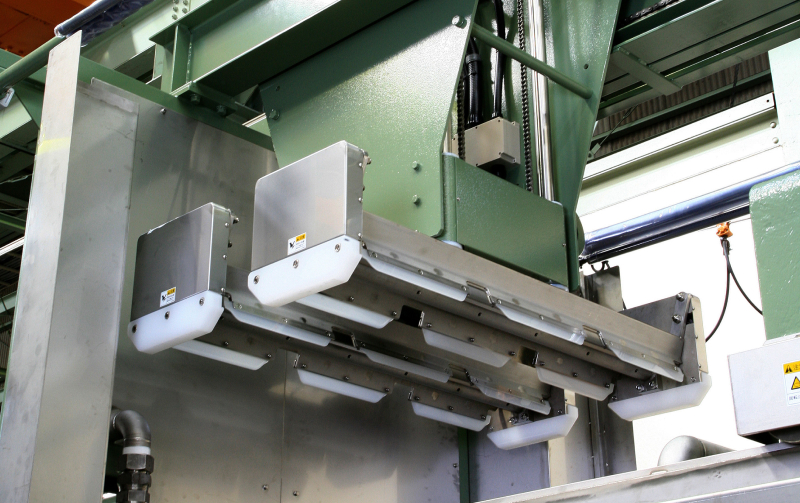
In fully automatic filter presses, a scraper system removes cake from the filter cloth and typically discharges material from two chambers at a time. Reliable cake discharge is a critical factor influencing overall equipment uptime and operational efficiency.
3.6 Filter Cloth Washing: Restoring Filtration Performance
The sixth and final step is filter cloth washing. After cake discharge, fine particles remaining on the filter cloth are removed using high-pressure water to prevent cloth blinding and maintain filtration performance for the next cycle.
In fully automatic systems, the scraper assembly is equipped with washing nozzles that move between the filter plates during cleaning. Typical washing pressures are around 2.0 MPa.
Incorporating cloth washing into the operating cycle helps maintain:
- Stable filtration performance
- Consistent filtrate clarity
- Predictable cake moisture content
over long-term operation.
4. Variables That Influence Operating Results: Moisture Content, Cycle Time, and Filtrate Clarity
Operating performance can be evaluated using three primary KPIs:
- Cake moisture content
- Cycle time
- Filtrate clarity
These results are mainly influenced by:
- Slurry characteristics
- Operating conditions
- Filter cloth specifications
Because values vary depending on process conditions and equipment configuration, it is generally more useful to understand overall trends than to focus on fixed numerical targets.
4.1 Slurry Characteristics and Operating Conditions
Slurry characteristics, including solids concentration, particle size, and viscosity, along with operating conditions such as filtration pressure, squeeze pressure, and cycle time, have a significant impact on both cake moisture content and overall productivity.
In general:
- Higher solids concentrations tend to reduce the time required to produce a target cake volume.
- Higher squeeze pressures and longer squeezing times tend to lower final cake moisture content.
However, extending cycle time reduces the number of filtration cycles that can be completed per day. Therefore, moisture reduction and throughput must be optimized together rather than independently.
Slurries containing very fine particles often form dense cake layers on the filter cloth surface, increasing filtration resistance and extending filtration time. In such cases, potential solutions include:
- Chemical conditioning or flocculation
- Optimization of filter cloth specifications
- Adjustment of operating parameters
4.2 Filter Cloth Specifications and Their Relationship to Filtrate Clarity, Cake Moisture, and Disposal Volume
Filter cloth properties, including material, weave pattern, and air permeability, directly affect filtrate clarity. These factors should be considered separately from cake dryness, which is generally determined by squeezing conditions and cycle settings.
The benefits of reducing cake moisture content are often easier to understand when expressed in practical terms. For example, reducing cake moisture content from 85% to 70% cuts the wet cake mass by approximately half while maintaining the same dry solids quantity.
This reduction directly impacts:
- Waste disposal volume
- Transportation requirements
- Disposal costs
- Cake handling frequency
5. Filter Press Operation by Automation Level: Manual, Semi-Automatic, Automatic, and Fully Automatic
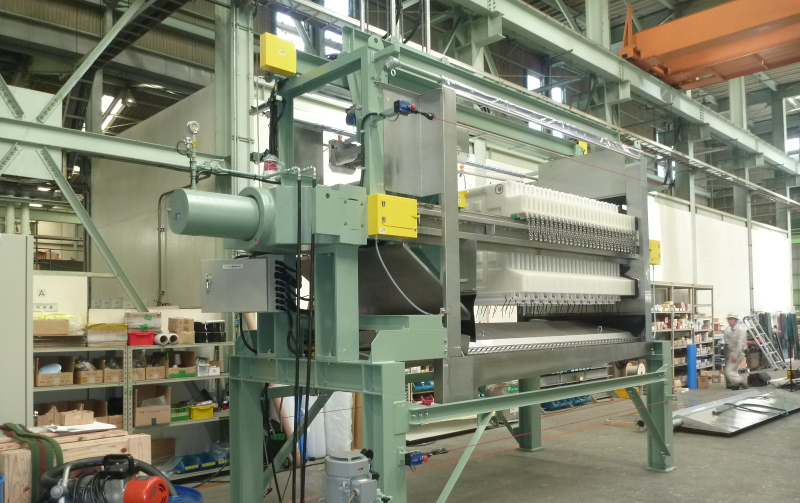
Although the operating cycle remains fundamentally the same, the workload placed on operators varies significantly depending on the degree of automation. A key point is that automation is not a filtration method itself; rather, it describes how many operating functions are performed automatically.
5.1 Comparison of Automation Levels and Operating Workload
The most labor-intensive steps are:
- Plate closing and opening
- Plate shifting
- Cake discharge
- Filter cloth washing
The table below illustrates how these functions differ by automation level.
| Automation Level | Closing & Opening | Plate Shifting | Cake Discharge | Cloth Washing | Labor Requirement |
|---|---|---|---|---|---|
| Manual | Manual | Manual | Manual | None | High |
| Semi-Automatic | Manual / Automatic | Manual | Manual | None | Moderately High |
| Automatic | Automatic | Automatic | Manual / Automatic | None | Moderate |
| Fully Automatic | Automatic | Automatic | Automatic | Automatic | None |
Manual filter presses require operator involvement throughout the entire cycle. As processing volumes increase, operational workload increases accordingly. Fully automatic systems mechanize plate shifting, cake discharge, and cloth washing, resulting in reduced labor requirements and shorter downtime between cycles.
Equipment selection should be based on factors such as:
- Processing capacity
- Available workforce
- Installation space
- Operating schedule
In plants that require nighttime or weekend operation, or where maintenance personnel are limited, the degree of automation applied to cake discharge and cloth washing often becomes a key design consideration.
▸ For information on the structure of each filter press type and selection guidelines, please refer to: Types of filter press
■ Technical Inquiry:
If you need assistance selecting operating conditions or determining the appropriate automation level:
■ Request For Filtration Test:
To evaluate performance using your actual slurry:
6. Common Operational Challenges and Design Considerations
Many of the challenges encountered in filter press operation can be addressed more effectively when viewed through the lens of equipment design.
This section organizes four common issues using a practical framework: Challenge → Requirement → Design Option → Next Step.
6.1 Sticky Cake and Excessive Manual Intervention
Sticky filter cakes often do not release under their own weight, creating additional labor requirements during cake discharge and increasing the risk of downtime and safety incidents. The key requirement is reliable cake discharge.
One design solution is the use of a scraper system, which mechanically removes cake from the filter cloth to ensure consistent discharge performance. Because cake stickiness is highly dependent on slurry characteristics, conducting a filtration test before installation can help identify potential discharge issues and reduce unexpected operational problems after commissioning.
6.2 Uneven Washing: The Importance of Uniform Distribution
Poor distribution of feed slurry or wash liquid can result in uneven washing, leading to variations in product purity and recovery. The primary requirement is uniform liquid distribution throughout the filter cake.
One design option is a double top-corner feed configuration, which promotes more uniform filtration, dewatering, and cake washing. By introducing liquid through two upper corner feed points, flow maldistribution is minimized and the likelihood of short-circuiting is reduced.
Uneven washing can lead to:
- Increased washing time due to re-washing requirements
- Product quality inconsistencies
- Off-specification product batches
For processes where washing directly affects product quality, washing performance should be considered during the equipment design stage rather than addressed later through operational adjustments.
6.3 Corrosion and Metal Contamination: Wetted Material Selection
When processing corrosive slurries, the material of construction for wetted parts has a significant impact on equipment life, maintenance requirements, leakage risk, and potential metal contamination. This should be viewed primarily as a materials-of-construction issue rather than a filter press type issue.
One design approach is to use a configuration with no metallic wetted components, such as:
- Polypropylene (PP)
- Natural Rubber (NR)
- EPDM
- Other compatible elastomeric materials
The most reliable approach is to review slurry chemistry and confirm material compatibility through filtration testing before finalizing equipment specifications.
6.4 Filter Cloth Replacement and Maintenance Efficiency
Filter cloth replacement is often one of the most time-consuming maintenance activities and can become a major source of downtime.
The key requirements are:
- Ease of replacement
- Simple maintenance procedures
- Reduced downtime
One practical design solution is a filter cloth attachment system in which the cloth is placed over the plate and secured using simple retaining fixtures. Because the mechanism is straightforward and easy to access, this configuration can be particularly beneficial at facilities with limited maintenance staffing.
▸ For more information on maintenance practices: Filter press maintenance
7. Verifying Performance with Your Own Slurry: Filtration Testing and Scale-Up
Once the basic operating principles are understood, the next step is to evaluate how the equipment will perform with your actual slurry. Because slurry properties can vary significantly, testing with real process liquid is often the starting point for equipment selection and investment decisions.
7.1 Information Required for Evaluation
To effectively plan a filtration test and evaluate results, the following information should be provided:
- Solids concentration
- Process liquid name (including composition and characteristics)
- Required filtration area
- Filter chamber thickness
- Application or process purpose
Providing these data points improves both test design and the accuracy of performance predictions.
7.2 Filtration Testing and Scale-Up Methodology
Kanadevia conducts filtration testing using pilot units that employ the same filtration structure and operating principles as full-scale equipment. Because the pilot unit shares the same basic design as the production machine, performance data obtained during testing can be used to size commercial equipment through straightforward scale-up calculations.
Testing is performed at the laboratory located within Kanadevia's Chikko Plant in Japan, and customer attendance is welcomed. For standard plate-size ranges, performance differences between pilot units and full-scale equipment are generally small. However, depending on specific slurry characteristics, safety factors and sizing assumptions may be adjusted when final equipment specifications are determined.
▸ For a detailed explanation of filter press sizing methodology, please refer to: How to size a filter press
8. Next Step: Consult with Kanadevia
The performance of a filter press is determined by the combination of:
- Equipment design
- Operating conditions
- Slurry characteristics
Kanadevia provides filtration testing services using pilot equipment that incorporates the same structural design as its commercial filter presses. Testing is conducted at the Chikko Plant laboratory in Japan, and customers may attend the tests in person.
To facilitate a productive discussion, please be prepared to provide:
- Solids concentration
- Process liquid name
- Required filtration area
- Filter chamber thickness
- Application details
Next Step
■ 【For Those Who Want to Verify Dewatering Performance First】
Evaluate filtration and dewatering performance using your actual slurry.
Request For Filtration Test■ 【For consultation regarding application suitability and specifications】
Technical Inquiry■ 【For Those Ready to Request a Quotation】
Quotation Inquiry■ 【For Those Gathering Initial Information】
Download the catalog for the TFAP Fully Automatic Compression Filter Press to learn more about its design, features, and specifications.
Catalogue Download