
Filter Press Maintenance: Inspecting and Preventing Problems with Filter Cloths, Cake Discharge, Plates, and Hydraulic Systems
Filter press maintenance directly affects equipment availability, cake quality, and operating costs. This article explains how to establish an effective preventive maintenance program by organizing filter cloth cleaning and replacement, cake discharge troubleshooting, filter plate and seal inspections, and hydraulic and diaphragm maintenance into weekly, monthly, and periodic inspection activities.
For those who would like to review the equipment structure and features, download the TFAP Fully Automatic Membrane Filter Press catalog via:
1. What Is Filter Press Maintenance: Preventive Maintenance to Avoid Downtime and Performance Loss
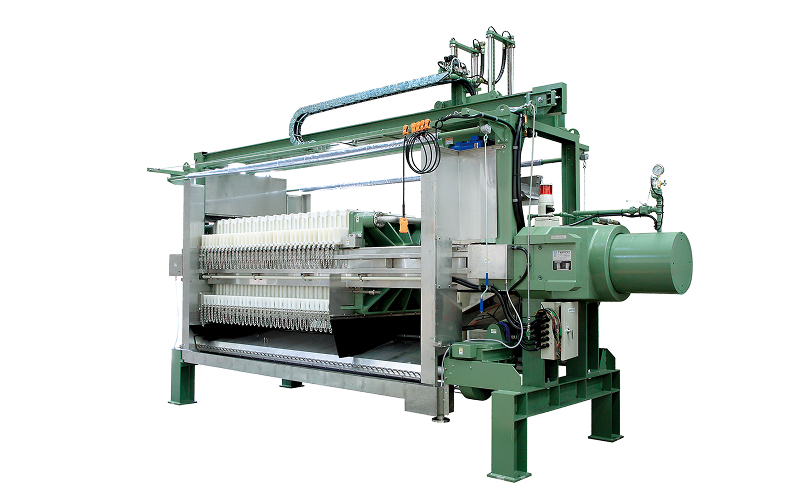
The most effective maintenance strategy is not reactive repair after a failure occurs, but preventive maintenance performed before performance degradation impacts production. Since wear components typically deteriorate gradually, the first signs of deterioration often appear as increased cake moisture content or reduced processing capacity rather than sudden equipment failure.
1.1 What Maintenance Affects
Maintenance performance is reflected in four key areas:
- Equipment availability (frequency of unplanned shutdowns and recovery time)
- Cake quality (cake moisture content and consistency)
- Cycle time (time required to complete one operating cycle)
- Operating cost (consumables, maintenance labor, and disposal costs)
For example, allowing filter cloth blinding to progress unchecked can increase filtration time, extend cycle duration, and ultimately reduce daily throughput. Similarly, diaphragm deterioration may appear as increasing cake moisture content, leading to higher cake disposal volumes and costs.
Because such changes are often visible in routine operating data, it is good practice to continuously monitor and record:
- Cake moisture content
- Cycle time
- Filtrate clarity
Tracking these indicators can help identify developing issues before they become serious problems.
1.2 Preventive Maintenance Framework: Weekly, Monthly, and Periodic Inspections
Filter press inspections should be conducted according to a planned schedule that defines both inspection frequency and target components. The following table provides a general framework focusing on filter plate and hydraulic systems. Actual inspection requirements and acceptance criteria vary by equipment model and should always follow the manufacturer's operation and maintenance manual.
| Frequency | Typical Inspection Items |
|---|---|
| Weekly | Hydraulic oil leaks (flanges and fittings), chain lubrication, removal of residual cake from guide rails and moving components, chain tension adjustment, filter cloth blinding or damage, spray nozzle blockage or wear |
| Monthly | Hydraulic oil level verification, torque inspection of moving blocks, open/close limit position confirmation, abnormal noise and vibration inspection |
| Yearly | Evaluation of filter cloth replacement requirements, diaphragm sheet inspection, hydraulic cylinder leak inspection, hydraulic oil replacement |
2. Filter Cloth Maintenance: Cleaning, Inspection, Replacement, and Blinding Prevention
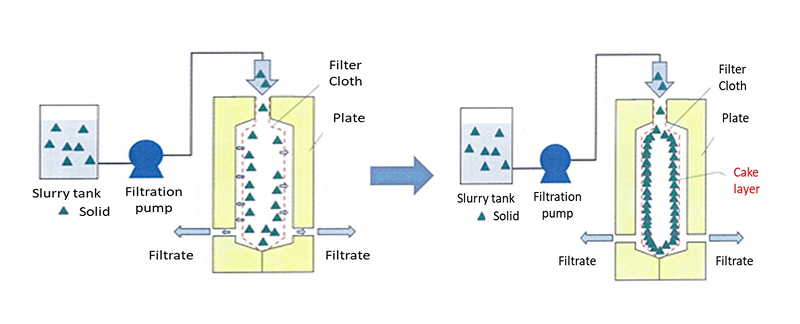
The filter cloth performs the core filtration function of retaining solids while being one of the most frequently replaced wear components. Because cloth condition affects filtration time, filtrate clarity, and cake release characteristics, cloth maintenance is often the starting point of an effective preventive maintenance program.
2.1 Filter Cloth Cleaning: High-Pressure Water, Chemical Cleaning, and Automatic Cloth Washing
As operation continues, fine particles gradually penetrate and accumulate within the cloth structure, reducing filtration performance. The primary cleaning method is high-pressure water washing, although chemical cleaning may also be required depending on the nature of the fouling material.
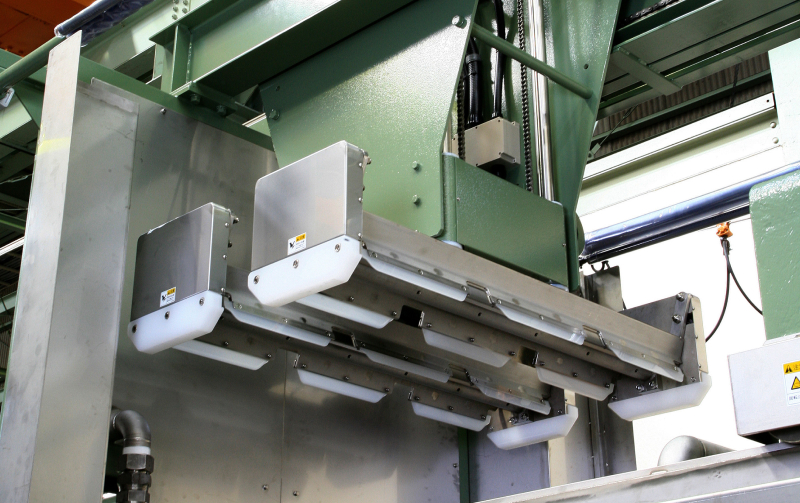
Fully automatic filter presses may incorporate cloth-washing nozzles integrated into the scraper assembly. These nozzles travel between the plates and automatically wash the cloth surface, often using high-pressure water (for example, approximately 2.0 MPa). By incorporating cloth cleaning into the operating cycle, filtration performance can be maintained more consistently.
Cleaning frequency depends on slurry characteristics and the rate of cloth blinding. Operational practices vary:
- Cleaning after every cycle
- Cleaning after several cycles
- Cleaning based on filtration performance trends
In practice, monitoring changes in filtration time is often the most effective method for determining the optimum cleaning interval.
2.2 Filter Cloth Inspection and Replacement Criteria
Filter cloth replacement should generally be based on observed performance symptoms rather than operating hours. Common indicators for replacement include:
- Filtration time does not recover after cleaning
- Filtrate becomes cloudy
- Cake release performance deteriorates
Torn cloths or damaged seams should be replaced immediately, since they can directly compromise filtrate clarity and solids retention.
During inspections, operators should evaluate not only the cloth surface condition but also:
- Cake thickness uniformity
- Cake release characteristics
- Filtration performance trends
These observations can help identify gradual cloth deterioration before significant production losses occur.
2.3 Reviewing Filter Cloth Selection
If filter cloth blinding occurs repeatedly despite proper cleaning practices, the cloth specification itself may need to be reconsidered.
In general:
- Finer filter cloths provide better particle retention during the early filtration stage but tend to blind more quickly.
- Coarser filter cloths are generally less prone to blinding but provide lower particle retention efficiency.
For this reason, persistent blinding problems may sometimes be mitigated by selecting a coarser cloth specification.
Filter cloth characteristics are determined by factors such as:
- Weave pattern
- Air permeability
- Cloth thickness
- Material construction
However, increasing permeability excessively may reduce filtrate clarity. Therefore, filter cloth selection should always balance cloth-cleaning performance and service life against the required filtrate quality specification.
▸ For more information on filter cloths and other consumables, please refer to Filtration equipment
3. Cake Discharge Issues and Corrective Actions: Cake Sticking and Poor Release
Cake that remains attached to the plates after opening the press can lead to manual cleaning, increased downtime, and additional safety risks. Discharge problems may originate from both cake properties and equipment configuration. This section explains how to identify the root cause and determine the appropriate corrective action.
3.1 Why Doesn't the Cake Discharge?
Several factors can prevent cake from releasing when the filter press is opened:
- The cake is highly sticky and does not separate under its own weight.
- Insufficient dewatering leaves the cake too soft for proper discharge.
- Blinded filter cloth surfaces reduce cake-release characteristics.
Poor cake discharge often results in manual scraping, increasing downtime and exposing operators to potential safety hazards. This is particularly important when personnel must reach into the machine or work at elevated locations.
If discharge problems persist, corrective action should focus not only on immediate cleaning but also on reviewing the dewatering conditions and discharge mechanism design.
3.2 Improving Cake Discharge Reliability
Corrective measures should address both the cake characteristics and the equipment configuration.
From the process side:
- Optimize squeeze conditions to achieve sufficient dewatering.
- Produce a cake firmness that promotes clean release.
From the equipment side:
- Maintain clean filter cloth and plate surfaces.
- Incorporate a scraper system to mechanically remove cake from the filter cloth.
In Kanadevia's fully automatic filter presses, the scraper removes cake from two chambers at a time, reducing both manual labor and discharge time. When cleaning plates and cloths, metal tools should be avoided because they may damage the filter cloth or plate surfaces. Appropriate cleaning tools should always be used.
4. Filter Plate and Seal Maintenance: Leakage, Plate Alignment, and Wetted-Part Corrosion
Leakage during operation affects not only filtrate recovery but also housekeeping, environmental compliance, and plant safety. The most common causes can generally be grouped into three categories:
- Seal-surface condition
- Filter plate alignment
- Wetted-part corrosion
This section outlines inspection priorities and long-term corrective approaches.
4.1 Leakage Between Plates and Seal-Surface Maintenance
One of the most common causes of leakage is material trapped between the sealing surfaces of adjacent plates. Examples include:
- Filter cake trapped on the sealing face
- Pinched filter cloth
- Misaligned or folded cloths
The primary preventive measure is routine cleaning of sealing surfaces and verification that cloths are properly installed. Operators should also confirm that the specified closing pressure is being achieved.
Ignoring small leaks can reduce filtrate recovery and create floor contamination and slip hazards. Identifying the cause during the early stages of seepage helps prevent major production interruptions. Kanadevia can also provide leak-detection and prevention systems designed to identify leakage caused by trapped cake or filter cloth before significant leakage occurs.
4.2 Plate Alignment and Guide Inspection
If plates are closed while misaligned, uneven loads may be applied, potentially resulting in plate deformation or cracking.
Regular inspection should include:
- Cleaning guide components
- Checking for wear on guide systems
- Inspecting plate hooks and support components
Proper alignment must be maintained to ensure reliable operation. Any warped, cracked, or damaged plate should be replaced promptly, as plate damage frequently becomes a source of leakage.
4.3 Wetted-Part Corrosion and Material Selection
Corrosion of wetted components often leads to recurring leakage and repeated maintenance shutdowns. As corrosion progresses, dissolved metals may contaminate both the filtrate and filter cake. This issue should primarily be viewed as a materials-selection challenge rather than a maintenance issue.
For corrosive process streams, a metal-free wetted-part design using materials such as:
- PP (Polypropylene)
- NR (Natural Rubber)
- EPDM
- PP membranes
can provide a more fundamental and long-term solution.
▸ For a detailed discussion of the benefits of wetted-material selection, refer to Advantages of filter press
5. Maintenance of Hydraulic Systems, Diaphragms, and Auxiliary Equipment
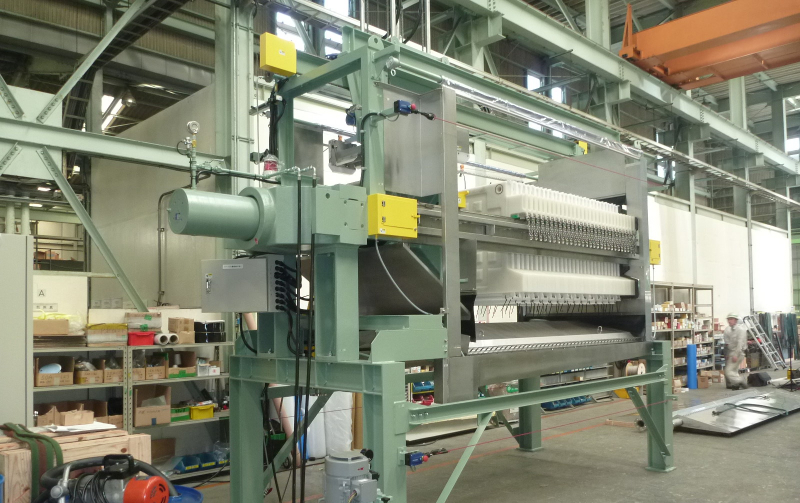
While filter plates and cloths often receive the most attention, the hydraulic system responsible for plate closing, the diaphragm responsible for cake squeezing, and the feed pump that delivers slurry are equally critical to maintaining performance. Problems in these systems frequently appear as increased cake moisture content or extended cycle times.
5.1 Hydraulic System Maintenance
Effective hydraulic maintenance begins with controlling oil cleanliness, oil level, and oil temperature. Oil degradation or contamination can impair cylinder and valve operation, reducing closing force and leading to leakage.
Weekly inspections should include checks for leakage around:
- Pipe fittings
- Hydraulic connections
- Cylinder rods
Hydraulic oil replacement intervals should follow the manufacturer's recommendations. However, actual oil life may vary depending on operating frequency and ambient temperature, so oil color and viscosity should also be monitored.
5.2 Diaphragm (Membrane) Inspection and Replacement
In membrane filter presses, diaphragm sheets are wear components. When a membrane is damaged, squeeze pressure cannot be maintained, making it difficult to achieve the target cake moisture content.
An important consideration is the ease of replacement. In some filter press designs, the diaphragm and filter plate are permanently integrated. In such cases, diaphragm deterioration may require replacement of the entire plate assembly. This can significantly increase maintenance costs and downtime.
Kanadevia utilizes a replaceable insert-type diaphragm design, allowing only the diaphragm sheet to be replaced when necessary.
5.3 Feed Pumps and Auxiliary Equipment
Reduced discharge pressure from the feed pump can extend filtration time and negatively affect overall cycle performance.
Routine inspections should include:
- Pump seals
- Pump valves
- Squeeze-air compressors or high-pressure water systems
- Filtrate piping and potential blockages
These components should be included in the scheduled maintenance program to ensure stable operation.
■ Technical Inquiry:
For questions regarding maintenance strategies or operating conditions, please contact:
■ Request For Filtration Test:
For verification of filtration performance using your actual slurry, please submit a request through:
6. Kanadevia's Approach to Maintainability
Maintenance requirements are influenced not only by operational practices but also by how maintainability is incorporated into the equipment design itself. This section explains how Kanadevia addresses maintenance through three key design considerations: corrosion prevention, ease of consumable replacement, and automation of cake discharge and cleaning.
6.1 Wetted-Part Material Design
Kanadevia's filter presses utilize polypropylene (PP) filter plates and elastomer diaphragm sheets, with no metal components exposed to the process fluid. By eliminating metal wetted parts, corrosion-related leakage and repair requirements can be reduced. This is particularly beneficial for applications involving corrosive process liquids, where maintenance workloads can otherwise become significant.
6.2 Easy Replacement of Filter Cloths and Diaphragm Sheets
The filter cloth is installed over the plate and secured using a simple retaining mechanism, resulting in a straightforward replacement procedure.
The diaphragm sheet utilizes an insert-type design that allows replacement of the diaphragm sheet alone, without replacing the entire filter plate assembly. Because the time required to replace consumable components directly affects maintenance downtime, ease of replacement is an important operational consideration.
6.3 Scraper Systems and Automation
By combining automated cake discharge using scrapers with automatic filter cloth washing, labor-intensive cleaning and discharge operations can be substantially reduced.
This configuration is particularly beneficial in facilities with:
- Limited maintenance personnel
- Labor-shortage concerns
- Night-shift or unattended operation requirements
▸ For information on various automation levels and filter press configurations, see Types of filter press
7. Preventive Maintenance and Troubleshooting
The final step is integrating maintenance activities into day-to-day operations. Reducing unplanned downtime requires two key elements:
- A structured inspection program
- The ability to quickly identify root causes when problems occur
This section summarizes preventive maintenance practices, spare-parts planning, troubleshooting methods, and common maintenance pitfalls.
7.1 Preventive Maintenance Checklist and Spare Parts Planning
Reducing unplanned downtime requires both systematic inspections and appropriate spare-parts inventory management.
Recommended spare parts include:
- Filter cloths
- Diaphragm sheets
- Seals and gaskets
- Hydraulic oil
Maintaining these items in inventory while considering lead times can significantly shorten recovery time following equipment issues. Particular attention should be given to filter cloths and diaphragm sheets because the required inventory quantity depends on whether full replacement or partial replacement is anticipated.
By tracking maintenance records and replacement history, facilities can better predict replacement intervals and optimize spare-parts inventory levels.
7.2 Troubleshooting by Symptom
When an abnormal condition occurs, narrowing down potential causes based on the observed symptom can significantly reduce troubleshooting time.
| Symptom | Possible Causes | Recommended Checks and Corrective Actions |
|---|---|---|
| Increased cake moisture content | Reduced squeeze pressure, damaged diaphragm, blinded filter cloth | Verify squeeze pressure, inspect diaphragm, clean or replace filter cloth |
| Reduced processing capacity | Filter cloth blinding, decreased feed-pump performance | Review filtration-time trends, evaluate cloth condition, inspect feed pump |
| Leakage | Material trapped on sealing surfaces, misaligned filter cloth, insufficient closing pressure | Clean sealing surfaces, reinstall cloth, verify closing pressure |
| Cake fails to discharge | Insufficient dewatering, sticky cake, poor cloth-release properties | Adjust squeeze conditions, clean plates and cloths, inspect scraper system |
| Cloudy filtrate | Torn filter cloth, cloth specification too coarse | Inspect and replace cloth, review cloth selection |
7.3 Common Maintenance Pitfalls: Ignoring Cloth Blinding, Damage from Metal Tools, and Deferred Inspections
One of the most common maintenance mistakes is delaying corrective action after early warning signs appear.
For example:
- Ignoring filter cloth blinding can gradually extend cycle times and permanently reduce throughput.
- Using metal tools during cleaning may damage filter plates or filter cloths, creating leakage paths and shortening component life.
- Postponing routine inspections often allows minor issues to develop into major shutdown events.
Incorporating inspections into standard operating procedures and maintaining detailed inspection records ultimately helps minimize downtime.
8. Next Step: Consult Kanadevia
Maintenance workload is heavily influenced by decisions made during the equipment design stage.
Kanadevia addresses maintainability through:
- Metal-free wetted-part construction
- Easy replacement of filter cloths and diaphragm sheets
- Stable cake discharge using scraper systems
These design features help reduce maintenance labor requirements and shorten maintenance-related downtime. If you would like assistance evaluating maintenance challenges, operating conditions, or equipment applicability, Kanadevia can provide technical support.
To facilitate the review process, please provide:
- Solids concentration
- Process liquid name and composition
- Required filtration area
- Chamber thickness
- Application details
Next Step
■ 【For Those Who Want to Confirm Performance First】
Verify dewatering performance using your actual slurry.
Request For Filtration Test■ 【For consultation regarding test conditions or application suitability】
Technical Inquiry■ 【For Those Ready to Specify Equipment】
Quotation Inquiry■ 【For Initial Information Gathering】
Download the TFAP Fully Automatic Membrane Filter Press catalog.
Catalogue Download