
FUNDAMENTALS AND SELECTION CRITERIA FOR PLATE AND FRAME FILTRATION
Plate and Frame Filtration is a general term for a liquid-solid separation method in which filter chambers are formed by plates and frames, with separation carried out through filter cloths.
In practice, this term is often used interchangeably with plate and frame filter press, so when selecting equipment, the starting point is to clearly define what needs to be achieved and to what extent—such as clarity, target cake moisture content, cake washing efficiency, operating rate, and maintenance workload.
This article first reviews the basic principles of plate and frame filtration while highlighting the key differences from chamber (recessed) types and membrane (diaphragm) squeezing types. We will examine the essential prerequisites for selection and address common operational challenges—such as corrosion, uneven washing, poor cake discharge , maintenance burdens, and misinterpretation of pressure readings. Finally, we will summarize how Kanadevia’s design philosophy and mechanisms effectively address these challenges through targeted technical solutions.
1. WHAT IS PLATE AND FRAME FILTRATION?
In the plate and frame configuration, plates and frames are alternately arranged and clamped together, with the frame thickness defining the filter chamber and cake thickness. When slurry is pumped into the press, solids accumulate on the filter cloth to form a cake, while the liquid(filtrate) passes through the cloth and is discharged. A structural characteristic of this system is the relative ease with which cake thickness can be adjusted by changing the frame thickness.
2. HOW IT WORKS: FILTER PRESS OPERATING CYCLE(Filtration → Cake Washing → Discharge)
Filter presses, including plate and frame types, generally operate in batch cycles. A typical sequence is:
- Closing (clamping)
- Feeding (Slurry pumping)
- Filtration
- Cake Washing (Optional, depending on process requirements)
- Opening (Release)
- Cake Discharge
- Cake Washing
It is also common to treat filtration and cake washing as an integrated core process.
From a design and operation perspective, the key is to identify which step in the cycle directly affects the KPIs (key performance indicators). For example, in wastewater treatment applications, cake moisture content strongly influences disposal costs, whereas in production processes, uniformity of cake washing (affecting purity and recovery) often becomes the dominant decision factor.
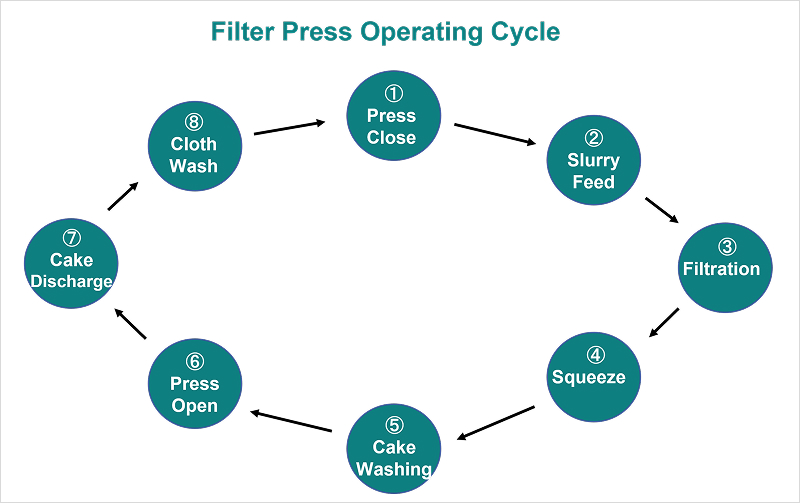
Fig.1: Filter press batch operating cycle — step ⑤ is optional depending on process requirements
3. DIFFERENCES AMONG MAJOR TYPES: PLATE AND FRAME / RECESSED CHAMBER / MEMBRANE SQUEEZE (DIAPHRAGM)
Filter presses are generally categorized into three main configurations: (A) Plate and Frame, (B) Recessed Chamber, and (C) Membrane Squeeze (Diaphragm).
In plate and frame presses, the frame itself forms the filter chamber, allowing relatively high flexibility in cake thickness adjustment. However, for modern high-throughput applications, recessed chamber presses are often preferred.
In recessed chamber presses, each filter plate has a recessed cavity, and two facing plates form one chamber.
In membrane squeeze presses, membrane is integrated into the chamber structure. Inflatable membranes are added inside the plates, applying additional pressure during the squeeze stage to reduce cake moisture and to re-dewater the cake after washing.
4. WHEN IS THE PLATE AND FRAME TYPE MOST SUITABLE?
The Plate and Frame type is particularly effective when priority is given to "flexibility in cake thickness," "washability/cleanability," and "process reliability." Plate and Frame also allows the use of drape over paper filter media. Typical scenarios include:
- When slurry characteristics fluctuate and the optimal thickness cannot be easily pre-determined.
- When residual liquor displacement or salt reduction using cake washing is essential (where purity and recovery rates are the primary KPIs).
- When simplified disassembly, cleaning, and filter cloth replacement procedures are desired due to limited maintenance personnel.
On the other hand, for large-scale processing that requires high-pressure dewatering or extensive automation, recessed chamber or membrane squeeze types may offer greater design flexibility. In practice, comparison should always be made from the perspective of which structure best achieves the required KPIs (washing efficiency, moisture content, operating rate).
5. DESIGN VARIABLES THAT GOVERN PERFORMANCE: PREREQUISITES TO DEFINE BEFORE SELECTION
Before comparing filtration types, clearly organizing the basic requirements that form the RFP helps keep evaluations consistent.
- Slurry Characteristics: pH, chlorides (Cl⁻), other corrosive factors, temperature, solids concentration, particle size distribution, adhesiveness, compressibility, abrasiveness.
- Target Performance: throughput (processing volume), filtrate clarity, target cake moisture content, necessity and purpose of cake washing (purity vs. recovery).
- Operating Conditions: continuous or batch operation, changeover time, downtime cost, maintenance setup (replacement frequency, night-hift availability).
- Constraints: installation space, hazardous material classification, wash water and chemical supply, effluent regulations.
In particular, corrosion and metal contamination, uneven washing, discharge of adhesive cakes, and filter cloth replacement tend to directly affect quality, safety, and downtime. Assigning priorities early makes later specification alignment smoother.
6. COMPARISON TABLE: CORE STRENGTHS BY CONFIGURATION
The table below compares the major configurations across identical parameters. Please note that these are general tendencies; the actual performance will vary based on slurry characteristics, target performance, and the scope of automation.
| Type | Key Structural Points | Best Suited For | Design & Operational Considerations |
|---|---|---|---|
| Plate & Frame | Chamber is formed by a plate and a separate frame. Cake thickness is easily adjusted via frame depth. | Applications requiring flexible cake thickness adjustment and experimentation or where paper media is required. Facilities prioritizing simple, manual set-up/disassembly. | Other types may be more advantageous for high-volume or high-pressure operation. Critical to address leakage/wicking countermeasures and discharge sequence design. |
| Chamber (Recessed) | Filter plates have a recessed shape; two plates joined together form a single chamber. | Applications prioritizing throughput and operational stability. Highly compatible with automation (opening, shifting, discharge, and washing). | Cake thickness is constrained by the recess depth. Cloth replacement methods vary by design; requires verification of setup/changeover procedures. |
| Membrane Squeeze (Diaphragm) | Integrates a flexible membrane into the chamber structure to apply additional squeeze pressure. | Applications where lower cake moisture directly impacts ROI. Ideal for re-dewatering after washing or reducing the potential for channeling during cake washing. | Care must be taken not to confuse filtration pressure with squeezing pressure. Increased equipment/utility complexity; maintenance design is crucial. |
Note: The table above represents general tendencies. Final decisions should be made based on testing and specification reviews, taking into account slurry characteristics and KPIs (washing efficiency, moisture content, and equipment availability/operating rate).
7. COMMON ON-SITE CHALLENGES AND SOLUTIONS
The following points are often overlooked during the selection process but are critical to addressing practical operational issues.
7-1. CORROSION AND METAL CONTAMINATION: MATERIAL SELECTION BASED ON "OPERATING CONDITIONS"
In the case of highly corrosive slurries (e.g., acidic or containing chlorides), the frequency of leaks and repairs increases, leading to higher downtime costs and visible safety risks. Furthermore, in production applications where the filter cake itself is the final product, metal contamination is treated as a significant quality risk.
Since material compatibility varies depending on liquid characteristics (pH / Cl- / temperature), wetted part configurations, and abrasiveness of the slurry, the practical approach is to narrow down material candidates by defining specific operating conditions and verifying them through testing.
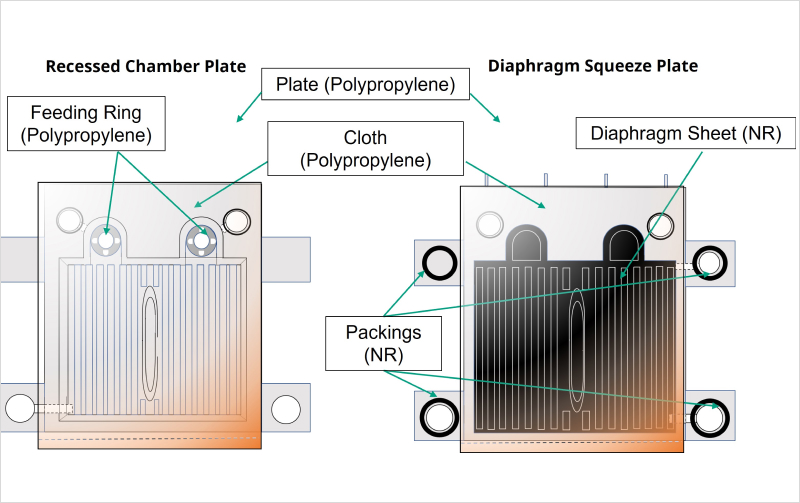
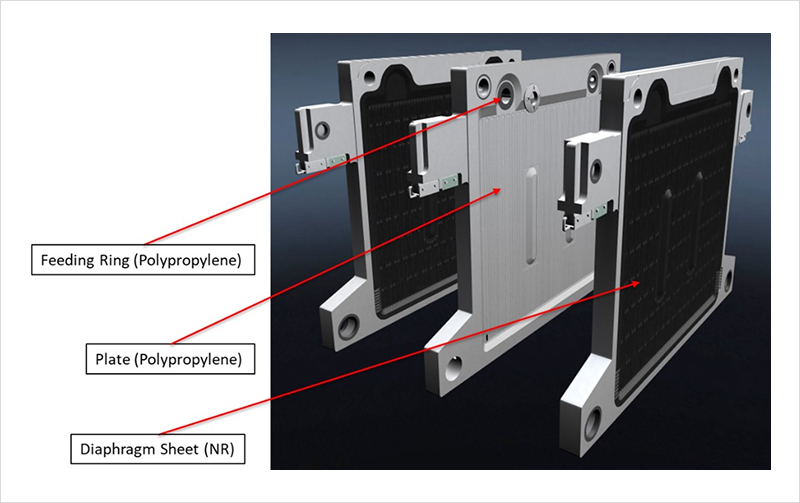
Fig.2: Metal-free wetted parts — polypropylene plate, feeding ring, and NR diaphragm sheet for corrosive slurry applications
7-2. UNEVEN CAKE WASHING (SHORT-PASSING / CHANNELING): MINIMIZING FLOW DEVIATION
Cake washing is the process of passing a washing liquid through the filter cake to displace the mother liquor or reduce soluble components.
Generally, if cake channeling or cracking occurs, the washing liquid bypasses the cake, creating a short-circuit flow (short-passing). This often leads to uneven washing. For processes where washing efficiency is a key KPI, it is essential to design the cake formation conditions and the wash liquid distribution (the flow path) as an integrated system.
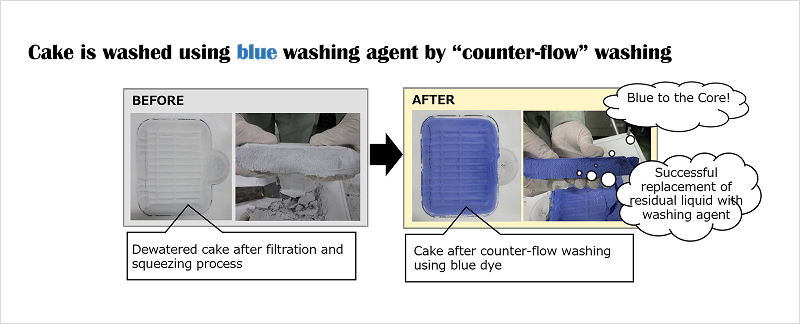
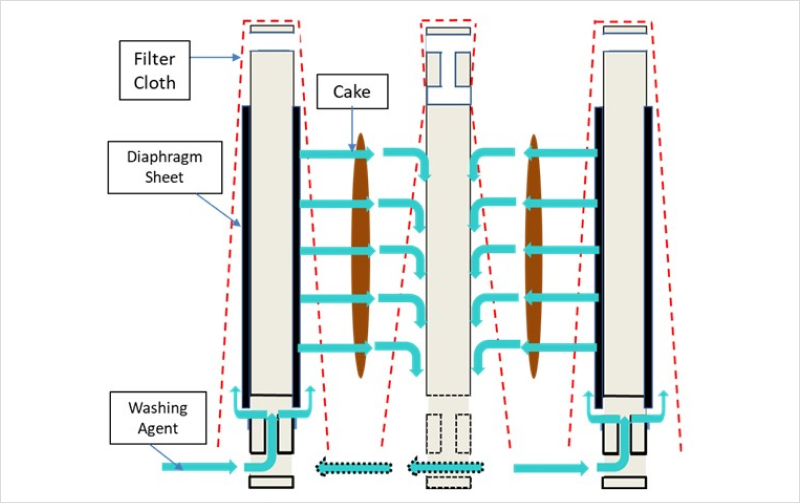
Fig.3: Counter-flow cake washing result (blue dye test) — washing agent distributes evenly through the entire cake, confirming thorough residual liquid replacement
7-3. CAKE DISCHARGE FAILURE: STICKY CAKES INCREASE MANUAL INTERVENTION
When the filter cake sticks to the cloth and fails to discharge (due to stickiness or poor release properties), the discharge process becomes a bottleneck in the cycle. Increased manual intervention not only leads to longer downtime but also raises safety risks and operator workload.
Discharge performance is influenced not only by slurry characteristics but also by filter cloth selection, release mechanisms, and the mechanical sequence for plate opening and shifting. It is crucial to design the equipment specifications and operational movements as a single unit, based on the expected state of the cake.
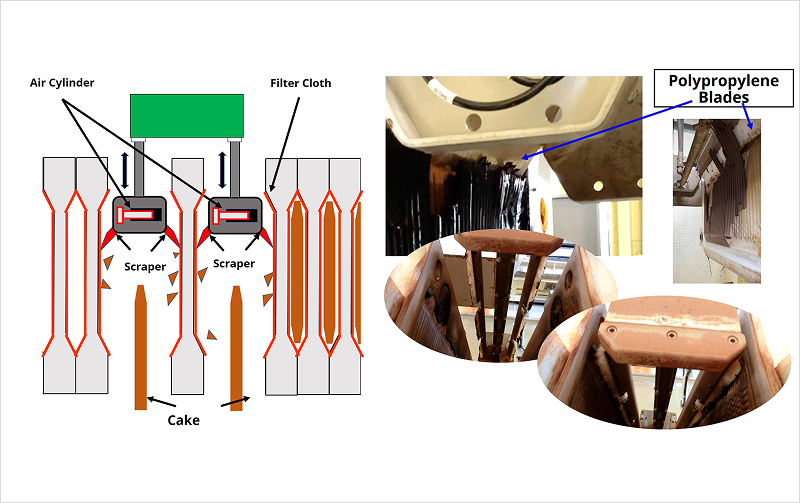
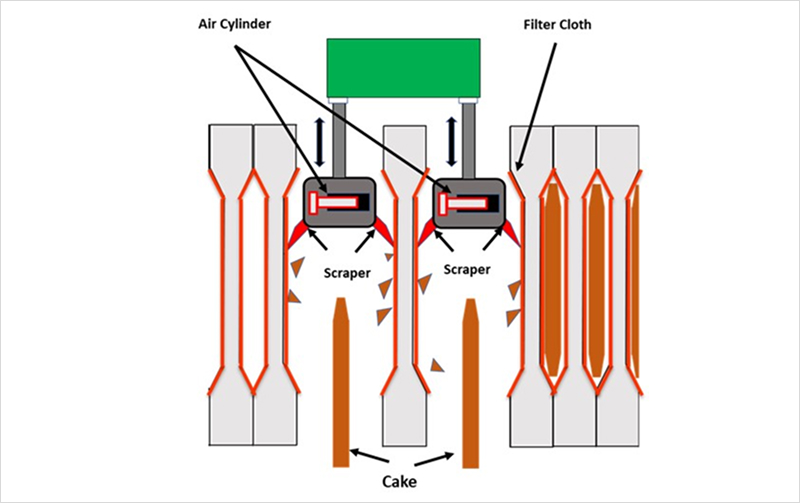
Fig.4: Scraper cake discharge mechanism — polypropylene blades physically remove cake from the filter cloth, reducing manual intervention for sticky cakes
7-4. MAINTENANCE (CLOTH REPLACEMENT & WASHING): REDUCING DOWNTIME VARIABILITY
Filter cloths are consumables. Blinding (low porosity) or wear can lead to deteriorating filtrate clarity and reduced throughput. If cloth replacement procedures are complex, downtime becomes unpredictable. This often results in unstable operations due to maintenance logistics (staffing, overnight shifts, etc).
In practice, your operational planning should look beyond just the ease of cloth replacement but also the frequency and method of washing (e.g., low-pressure rinsing vs. high-pressure cleaning).
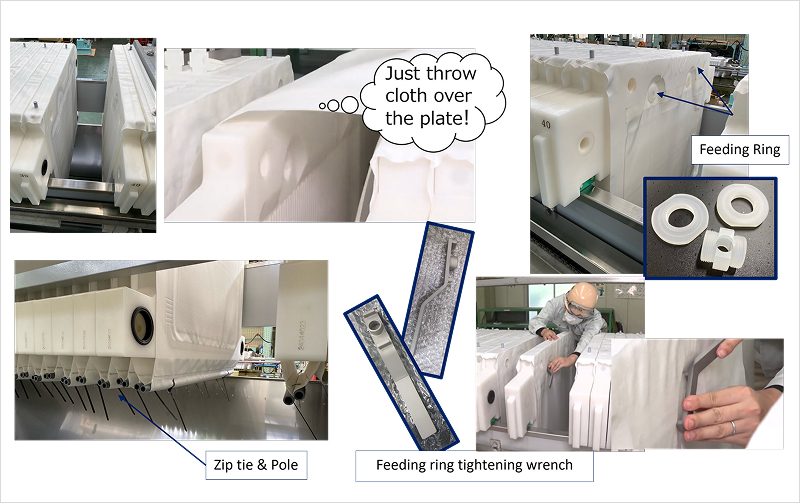
Fig.5: Filter cloth replacement — cloth is draped over the plate and secured with a feeding ring and zip tie; no gasket required
7-5. MISINTERPRETATION OF “PRESSURE”: DISTINGUISHING BETWEEN OPERATING (FILTRATION) AND SQUEEZING (DIAPHRAGM) PRESSURE
Manufacturer specifications often conflate operating pressure (filtration pressure) with squeezing pressure (the pressure used to inflate the membrane). Comparing these directly can lead to significant misunderstandings. It is essential to separately evaluate which pressure is effective at which stage of the process in relation to your required KPIs (filtrate clarity, moisture content, and washing efficiency).
8. CONDITIONS WHERE KANADEVIA FILTER PRESSES DELIVER MAXIMUM VALUE
Based on the evaluation criteria discussed, this section outlines the specific conditions where Kanadevia filter presses are most effective. Rather than simply listing features, we focus on "which challenges are addressed and how" along with the underlying reasons.
8-1. METAL-FREE WETTED PARTS (PP + RUBBER): SOLUTIONS FOR CORROSION AND METAL CONTAMINATION
The Challenge: Corrosion-related leakage/repair and quality risk from metal contamination
The Value: Our design, which eliminates metal from all wetted parts, expands material compatibility options for corrosive slurries. This significantly contributes to mitigating metal-derived contamination risks
8-2. DOUBLE TOP CORNER FEED: ACHIEVING UNIFORM FILTRATION, DEWATERING, AND CAKE WASHING
The Challenge: Purity and recovery rates fluctuate due to uneven washing; occurrences of dripping or leakage.
The Value: By minimizing channeling (short-circuiting) and ensuring the wash liquid is distributed evenly throughout the entire cake, this design stabilizes yield and quality in processes where washing efficiency is a key KPI.
8-3. SCRAPER-ASSISTED CAKE DISCHARGE: REDUCING DOWNTIME AND MANUAL INTERVENTION FOR STICKY CAKES
The Challenge: Discharge stalls due to sticky cakes, leading to increased manual labor.
The Value: By employing a scraper-based release mechanism, we promote more consistent and complete cake discharge. This eliminates cycle bottlenecks and ensures a seamless automated process.
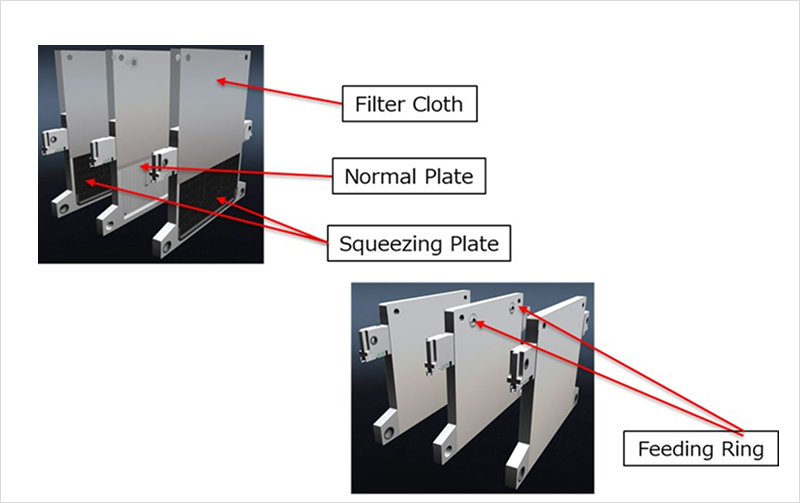
8-4. DRAPE-OVER CLOTH REPLACEMENT: REDUCING MAINTENANCE LABOR AND SAFETY RISKS
The Challenge: Cloth replacement becomes a bottleneck, making downtime unpredictable.
8-5. FILTRATION TESTING: REDUCING UNCERTAINTY THROUGH DATA
The Challenge: Uncertainty regarding throughput, moisture content, and washing performance when handling new slurries or scaling up processes.
The Value: By conducting tests with actual slurry samples, we quantify processing capacity, target moisture levels, and filter cloth suitability. This facilitates data-driven investment decisions and finalized equipment specifications.
Specific Examples: We offer on-site or witnessed filtration testing using our test units. Our typical setup includes: Unit Type: 350mm Single-Chamber Filter Press (4 units available)/ Filtration Area: 0.117 m2/ Chamber Thickness: 25mm, 30mm, or 40mm
Note: Feasibility depends on liquid characteristics and must be confirmed in advance.
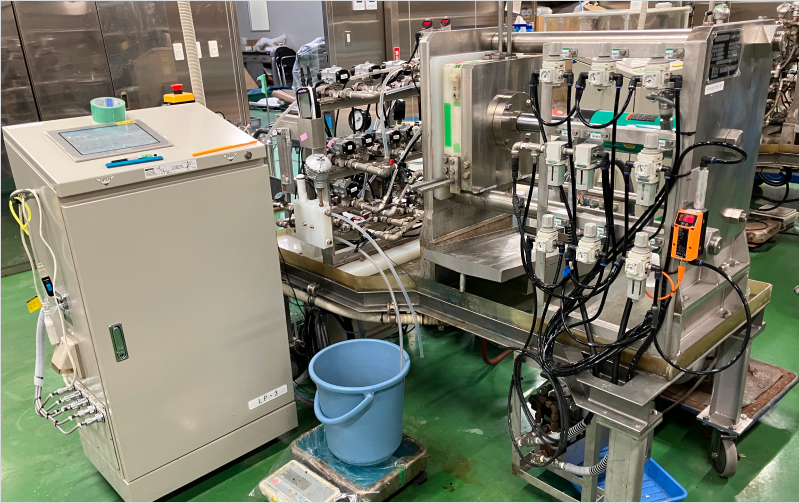
Fig.6: Filtration test equipment (350 mm × 1-chamber unit, filter area 0.117 m², chamber thickness 25/30/40 mm) — witness testing available
9. NEXT STEPS: FROM CONSULTATION TO FINALIZING SPECIFICATIONS
To ensure a smooth start even if your specifications are not yet fully defined, we offer three main points of contact:
Request For Filtration Test:
This is the fastest route to finalizing specifications. Confirming performance with your actual slurry samples is the most effective way to ensure success.
Technical Inquiry:
Best for replacement or expansion projects where specifications are already established.
Catalogue Download:
Ideal for information gathering during the initial stages of consideration.
Information that accelerates evaluation includes application, slurry name, throughput, solids concentration, pH, chlorides (Cl⁻), temperature, target moisture content, washing requirements (purity / recovery), approximate particle size and adhesiveness, required filtration area, and chamber thickness.
TERMINOLOGY USED IN THIS ARTICLE
- Plate and Frame Filtration
- Recessed Chamber
- Membrane / Diaphragm Squeeze
- Cake Washing
- Cake Discharge
- Filter Cloth
- Filtrate