
Advantages of Filter Press: A Practical Guide to Evaluating Business Benefits
The advantages of a filter press should not be viewed simply as a list of technical features. Instead, they should be evaluated through three business-oriented lenses: key performance indicators (KPIs), operating costs, and regulatory compliance. When translated into these measurable outcomes, the benefits of a filter press become directly relevant to investment decisions.
This article explains how core advantages such as high cake dryness and superior filtrate clarity translate into lower disposal costs, improved water recovery, and easier compliance with wastewater regulations. It also highlights how the actual benefits achieved depend on equipment design and operating conditions, and why filtration testing is essential for validating performance with your specific slurry.
For those who would like to learn more about the structure and features of our product, a product catalog for the TFAP Fully Automatic Membrane Filter Press is available for download.
1. Three Perspectives for Understanding the Advantages of a Filter Press
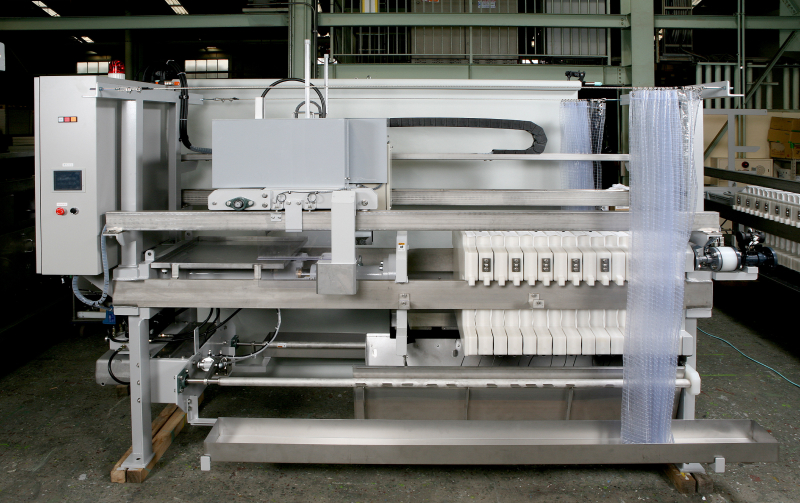
The true value of a filter press becomes clear when its performance is connected to business objectives. The following three perspectives provide a practical framework for evaluation.
1.1 Key Advantages of a Filter Press at a Glance
Compared with other solid-liquid separation technologies, the main advantages of a filter press can be grouped into six categories: (1)High cake dryness, (2)Excellent filtrate clarity, (3)Advantages of pressure filtration compared with alternative methods, (4)Adaptability across a wide range of industries and applications, (5)Multiple automation options, (6)Reliable operation due to a simple and robust mechanical structure. The following sections explore each of these benefits in detail.
(For a comparison of filter press configurations and operating principles, see our guide: Types of Filter Press.)
1.2 Evaluating Benefits Through KPIs, Costs, and Compliance
From a KPI perspective, key evaluation criteria include: Cake moisture content, Total suspended solids (TSS) in the filtrate, Cycle time, Water recovery rate. From a cost perspective, important considerations include: Capital expenditure (CAPEX), Operating expenditure (OPEX), Waste disposal costs, Labor costs
From a regulatory perspective, facilities must evaluate compliance with wastewater discharge requirements and waste classification standards. Translating filter press performance into these business metrics provides a more objective basis for equipment selection and investment decisions.
1.3 Performance Depends on Equipment Design
Not all filter presses deliver the same results. Factors such as: Wetted-part materials, Cake washing systems, Cake discharge mechanisms, Filter cloth selection, Automation level, can significantly affect actual performance. Therefore, achieving the full benefits of a filter press requires proper equipment configuration and process optimization.
2. High Cake Dryness Reduces Waste Volume and Disposal Costs
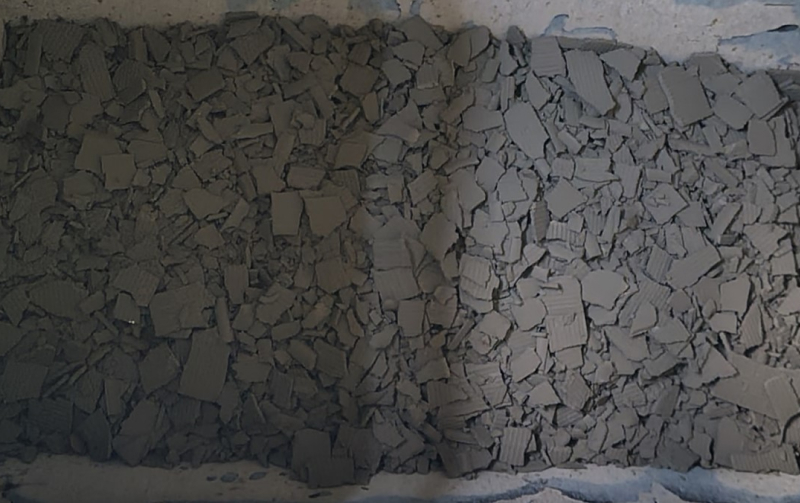
One of the most significant advantages of a filter press is its ability to produce relatively dry filter cakes compared with many other mechanical dewatering technologies. According to official U.S. EPA publications, recessed plate filter presses are recognized as capable of achieving some of the highest cake solids concentrations among mechanical dewatering technologies.
2.1 Typical Cake Dryness Performance
A conventional chamber filter press commonly achieves cake solids concentrations in the range of approximately 30–45%, depending on slurry characteristics and operating conditions. When equipped with a membrane squeeze system, the solids concentration can be increased further by applying additional mechanical pressure after the initial filtration cycle. Because results vary according to slurry properties, performance should always be confirmed through testing using representative samples.
(For detailed information by application and equipment type, please see our articles Filter Press Applications and Industrial Filter Press.)
2.2 Disposal Cost Savings Through Moisture Reduction
Disposal costs are typically charged based on weight or volume, meaning that reducing moisture content directly lowers disposal expenses. In the United States, hazardous waste disposal can be particularly costly. For wastes classified under categories such as F006 (electroplating wastewater treatment sludge) defined in the Federal Register, improvements in cake dryness can have a significant financial impact. A detailed cost analysis is provided in Section 7, TCO and Return on Investment.
2.3 Additional Dewatering with Membrane Squeeze Technology
A membrane squeeze filter press uses expandable diaphragms to compress the filter cake after filtration. This process mechanically removes additional water from the cake and can further reduce moisture content beyond what is achievable with a standard chamber plate design. The magnitude of improvement depends on slurry composition and compressibility.
▸ (For more information about membrane squeeze technology, see our guide to Industrial Filter Presses.)
3. Superior Filtrate Clarity Supports Water Reuse and Regulatory Compliance
Because the filter cake formed during filtration acts as a secondary filtration medium, filter presses tend to produce clearer filtrate than many alternative technologies. This directly supports water recycling and compliance with U.S. wastewater regulations, creating value from both compliance and sustainability perspectives.
3.1 Clear Filtrate Through the Filtration Mechanism
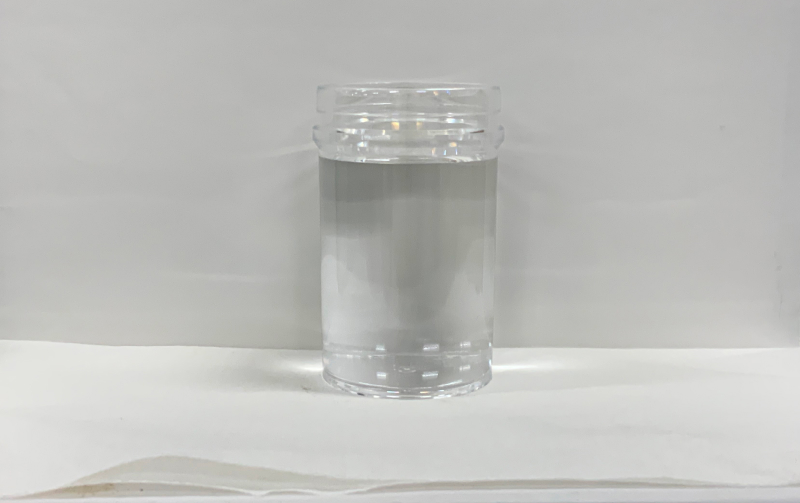
After the filter cloth captures larger particles during the initial stage of filtration, the filter cake itself acts as a secondary filtration medium that retains finer particles. This self-filtration effect results in increasingly clear filtrate during the later stages of the cycle. It is one of the primary reasons filter presses are selected for clarification applications.
3.2 Business Benefits of Water Recovery and U.S. Regulatory Compliance
In the United States, programs such as NPDES and industry-specific Effluent Limitation Guidelines (ELGs) establish strict limits on contaminants including Total Suspended Solids (TSS) in wastewater. By producing clear filtrate, filter presses help facilities meet these requirements. In addition, reclaiming water for process reuse reduces freshwater consumption and associated costs.
3.3 Design Factors Affecting Filtrate Quality
Achievable filtrate quality depends on several factors, including filter cloth specifications, operating pressure and cycle time, as well as upstream conditioning processes such as coagulation and thickening. Filtrate clarity is influenced not only by the filter press itself but also by filter cloth selection and overall process design.
4. Relative Advantages Compared with Alternative Technologies
To properly evaluate the advantages of a filter press, comparisons with other solid-liquid separation technologies are essential. This section provides an objective overview of the differences and identifies the operating conditions under which pressure filtration offers distinct advantages. For a broader overview of separation technologies, see our guide to Liquid Filtration.
4.1 Comparison with Centrifuges: Moisture Content and Footprint
Centrifuges offer advantages in continuous operation and compact installation requirements. However, the achievable cake moisture content is generally higher than that of a filter press. Filter presses also tend to operate with lower power consumption, noise, and vibration levels, and are often selected where reduced maintenance requirements are important.
Conversely, centrifuges may be advantageous when continuous high-volume processing and space efficiency are the primary considerations. The optimal choice depends on the specific application requirements.
4.2 Comparison with Belt Filter Presses: Continuous vs. Batch Operation
Belt filter presses are well suited for continuous processing of large flow rates. However, the achievable cake moisture content is generally higher than that of pressure filter presses. In addition, slurries containing significant amounts of oil or grease can create belt fouling challenges.
The U.S. EPA categorizes filter presses and belt filter presses as distinct dewatering technologies, and filter presses are often preferred when maximum cake dryness is the primary objective.
4.3 Conditions Where Pressure Filtration Provides a Distinct Advantage
Based on the comparisons above, pressure filter presses tend to offer clear advantages under the following conditions:
- Achieving low residual moisture content is a top priority.
- Strict filtrate clarity requirements must be met.
- The slurry contains fine particles or exhibits low permeability.
- Waste disposal costs are high, making reductions in waste weight or volume financially significant.
- Dewatered solids must satisfy landfill or hazardous waste disposal requirements.
For these applications, the benefits of pressure filtration are often particularly pronounced.
For an overview of the major technologies and the selection workflow, please refer to Liquid filtration.
■ The most reliable way to verify which benefits can be achieved with your slurry is through filtration testing using actual slurry samples.
■ For consultation on application suitability or specifications, please submit
Technical Inquiry5. Operational Benefits Through Versatility and Automation
Filter presses are used across numerous industries, including chemicals, pharmaceuticals, catalysts, non-ferrous metals, battery materials, wastewater treatment, mining, and food processing. Their broad applicability, combined with increasing levels of automation and a robust mechanical design, provides substantial operational benefits.
5.1 Adaptability Across Industries and Applications
One of the key advantages of filter presses is their flexibility. Filtration method, automation level, and wetted-part materials can be configured to suit specific slurry characteristics and performance objectives. Filter presses are widely applied in: Chemical processing, Pharmaceutical production, Catalyst manufacturing, Non-ferrous metal refining, Battery material production, Pigment manufacturing, Food processing, Wastewater sludge treatment, Mining operations
▸ For specific examples of how filter presses are used across different industries and applications, please see our overview here.:Filter press applications.
5.2 Automation and Labor-Saving Benefits
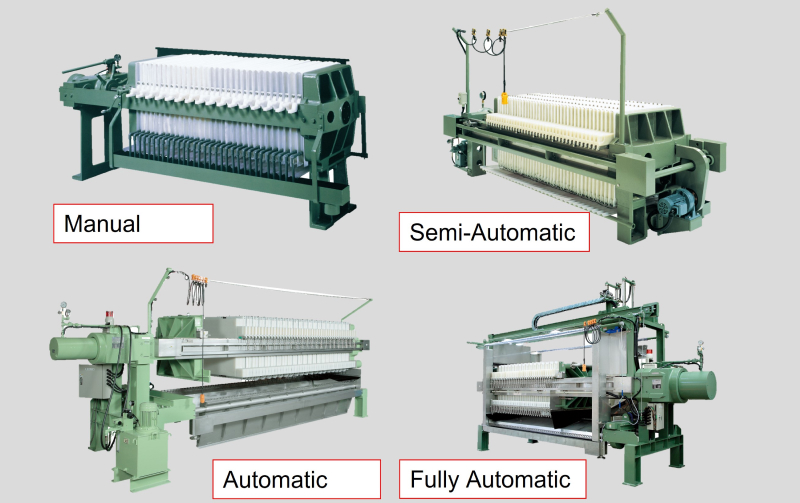
Filter presses are available in manual, semi-automatic, and fully automatic configurations. Automation can be applied to functions such as: Cake discharge, Filter cloth washing, Operational monitoring, Cycle control.
These features help reduce labor requirements while improving operational consistency and uptime. For detailed information on automation features and available configurations, please refer to our Industrial Filter Press guide.
5.3 Reliability, Durability, and Low Maintenance Requirements
Filter presses contain relatively few high-speed rotating components and feature a mechanically simple, robust design. As a result, they offer: High reliability, Long equipment life, Resistance to abrasive and corrosive slurries, Reduced maintenance requirements. With appropriate maintenance practices, filter presses can provide stable operation over many years. U.S. EPA references also recognize recessed plate filter presses as one of the longest-established and most reliable dewatering technologies.
6. Operational Considerations for Maximizing Benefits
The actual benefits achieved from a filter press depend heavily on equipment selection and process design. This section highlights practical considerations that should be evaluated during the design phase to maximize performance.
6.1 Wetted-Part Material Selection Affects Corrosion and Contamination Risk
For applications involving acidic leach solutions, chloride-rich environments, or alkaline slurries, the selection of wetted-part materials is critical. Improper material selection can lead not only to corrosion failures but also to product contamination risks in industries such as chemicals, pharmaceuticals, and catalyst manufacturing. Metal contamination should be viewed primarily as a wetted-material design issue rather than a limitation of filter press technology itself.
6.2 Effects of Uneven Cake Washing and Poor Cake Discharge
Non-uniform cake washing can cause variability in key performance indicators such as product purity and recovery rate. Similarly, when handling sticky filter cakes, inadequate discharge mechanisms can increase manual cleaning requirements and reduce equipment availability. Addressing these factors during the design phase helps ensure that the benefits of high cake dryness and superior filtrate quality are fully realized.
6.3 Filter Cloth Selection and Ease of Replacement Affect Performance
Filter cloth specifications, material construction, and permeability have a direct impact on filtrate quality. In addition, difficult or time-consuming cloth replacement procedures can reduce plant availability by increasing maintenance downtime. For this reason, filter cloth performance should be verified through testing, while ease of replacement should be considered as part of overall equipment design.
7. Translating Advantages into Financial Metrics: ROI and TCO
To support investment decisions, filter press benefits should be evaluated in terms of Total Cost of Ownership (TCO), which combines both capital expenditure (CAPEX) and operating expenditure (OPEX).
7.1 CAPEX, OPEX, and TCO Structure
CAPEX typically includes: Equipment purchase, Installation, Piping, Electrical work
OPEX typically includes: Electricity, Filter cloth replacement, Chemicals, Maintenance, Labor, Waste disposal
TCO represents the combined cost of CAPEX and OPEX over the equipment lifecycle.
For filter presses, waste disposal costs, filter cloth replacement costs, and labor costs often represent a significant portion of OPEX. Improvements in cake dryness and automation can therefore become major drivers of long-term cost reduction.
7.2 Example: Impact of Moisture Reduction on Annual Disposal Costs
When waste disposal charges are based on weight, reducing moisture content directly lowers the total amount of material requiring disposal. For example, reducing cake moisture content from 85% to 70% can result in approximately a twofold reduction in wet waste mass when dry solids production remains constant.
Industry case studies have demonstrated that moisture reduction can produce substantial annual savings in waste disposal costs. Although the exact value depends on site-specific conditions, this is a clear example of how filtration performance can be translated into business metrics.
7.3 Evaluating ROI and the Role of Filtration Testing
When evaluating return on investment, it is advisable to use conservative assumptions and validate key performance indicators through filtration testing. Testing with representative slurry samples allows facilities to determine: Achievable cake moisture content, Filtrate quality, Cycle time. These results can then be incorporated into equipment sizing and cost analyses, reducing uncertainty in investment decisions.
8. Next Step: Consult Kanadevia
A metal-free wetted-part design using polypropylene plates and elastomeric materials such as NR, EPDM, and PP helps address corrosion and metal contamination concerns.
8.1 Kanadevia's Four Core Strengths
| ①Metal-Free Wetted Parts (PP + Elastomer Construction) A metal-free wetted-part design using polypropylene plates and elastomeric materials such as NR, EPDM, and PP helps address corrosion and metal contamination concerns. |
②Double Top-Corner Feed Design This feed arrangement promotes uniform filtration, dewatering, and cake washing, helping to minimize washing inconsistencies while supporting stable purity and recovery performance. |
| ③Reliable Cake Discharge with Scraper Mechanism The scraper system enables consistent cake discharge, even when handling sticky filter cakes, helping maintain equipment availability while reducing manual intervention. |
④Easy Filter Cloth Replacement The filter cloth mounting method allows cloths to be installed from above, reducing maintenance effort and minimizing downtime during replacement. |
8.2 From Filtration Testing to Equipment Implementation
Kanadevia conducts filtration testing using four laboratory-scale single-chamber filter presses (350 mm × 1 chamber) located at its Chikko facility. Testing allows verification of: Achievable cake moisture content, Filtrate clarity, Cycle time. Based on the results, Kanadevia recommends the most suitable filtration method, automation level, and wetted-part materials. Witness testing is also available.
When submitting an inquiry, please provide the following information: Process liquid name, Solids concentration, Required filtration area, Chamber thickness, Application. This information enables efficient evaluation and equipment selection.
Next Step
■ For Those Who Want to Verify Performance First:
Verify which benefits can be achieved with your actual slurry through filtration testing:
Request For Filtration Test■ For consultation regarding application suitability or product specifications:
Technical Inquiry■ For Those with Defined Specifications:
Quotation Inquiry■ For Those in the Information-Gathering Stage:
Download the TFAP Fully Automatic Membrane Filter Press Product Catalog to learn more about its design, features, and performance:
Catalogue Download